California
State of United States · North America
50/100
#10 of 51 in United States
would rank #3 among countries
28.5 g of flower (8 g of concentrate) and six plants per household. Shops, delivery and licensed consumption lounges; many cities still ban sales.
In short all countries →
- Can I carry it?YesLegal up to a limit
- Can I grow it?YesA few plants at home are legal
- Can I buy it?YesIn licensed shops
- Can I use it in public?NoIn private only
- What if I'm caught?NothingIf you stay within the limits
A rough guide read from the scores and the rules below, not legal advice. The details and the exceptions are in each segment: select an answer to jump to it.
Cannabis in California not part of the score · all 25 datasets ↓
Who uses it
About 1 in 4
people aged 12+ in California used cannabis in the past year.
- Past year
- 23.6%
Survey 2022–2023, its own age band. Includes vaping; a model-based estimate.
Source SAMHSA — NSDUH 2022–2023 model-based state prevalence estimates, Table 2 (marijuana use in the past year, ages 12+)What they call it · in all of the United States
- Pot[1]American Englishslang recorded 1938; origin disputedIn the atlas →
- Reefer[2]American Englishjazz-age word for a cannabis cigaretteIn the atlas →
- Grass[3]American Englishslang recorded by 1932In the atlas →
- Joint[4]American Englisha hand-rolled cannabis cigaretteIn the atlas →
- Dope[5]American Englishfrom Dutch doop; never cannabis aloneIn the atlas →
- Marijuana[6]Mexican Spanishthe law's word since the 1930sIn the atlas →
Score breakdown 50/100 · how the scores are made
Federal law still prohibits non-medical cannabis everywhere in the United States; these scores describe state law. Counties and cities can add their own rules, and state law does not apply on federal land.
Adults 21+ may hold 28.5 g of flower and 8 g of concentrate. More is a misdemeanour with up to six months in jail and a $500 fine.[7]
| Amount | What happens | Punishment | Fine |
| Up to 28.5 gAdults 21 and over; up to 8 g of concentrate besides | Legal | — | — |
| Over 28.5 g | CriminalMisdemeanor | Up to 6 months | Up to US$500 |
Six plants per household. More than six is a misdemeanour with up to six months and a $500 fine.[7]
| Amount | What happens | Punishment | Fine |
| Up to 6 plantsPer household, adults 21 and over | Legal | — | — |
| Over 6 plants | CriminalMisdemeanor | Up to 6 months | Up to US$500 |
An adult 21+ may give another adult 21+ up to 28.5 g of non-concentrated cannabis or up to 8 g of concentrated cannabis, including concentrate contained in cannabis products, without any compensation. These are the ordinary adult-use gift permissions.[8]
Context not part of the score · every country, by topic →
Sections written for California come first in their place; the others hold for all of United States and are marked so.
Since Proposition 64 in 2016, adults 21 and over may grow six plants and keep up to an ounce of flower and 8 g of concentrate; the same law licenses commercial growing and retail sales.[7] Under-18s caught with any amount get an infraction with drug counselling and community service, not a criminal record.[7] Four states legalised in 2016, including California. California voters rejected legalisation in 1972. A 2010 legalisation measure failed.
California wrote the first medical law: Proposition 215 (1996), now Health and Safety Code section 11362.5, lets patients with a doctor's recommendation possess and grow.[11] California allowed medical use in 1996.
For all of United States; nothing written for California yet.
Non-profit growing clubs of the Spanish kind are not part of American law; what some states license instead are places to consume, usually run for profit.[14] Colorado licenses two kinds of place, each depending on a local ordinance or resolution.[15] A marijuana hospitality business may allow consumption, and section 44-10-609 forbids sale or exchange for payment on those premises.[16] A retail marijuana hospitality and sales licence under section 44-10-610 allows marijuana to be sold and consumed on the same premises.[17] Oregon does not license cannabis consumption lounges.[18] Its indoor clean-air law also covers members-only businesses and private events at workplaces; private residences are treated separately.[18] Nevada's Cannabis Compliance Board licenses consumption lounges under Assembly Bill 341 of 2021.[19] A retail lounge must be attached or immediately next to an adult-use shop.[20] An independent lounge is not, and it sells single-use or ready-to-consume cannabis for use in the lounge.[20] A city or county may limit or bar them.[19] A 2017 bill to license lounges missed its deadline.[21] A counsel opinion that September said a business could let patrons use marijuana if it was not sold, and that opinion was not a licensing statute.[21] Massachusetts approved three types of social-consumption licence in December 2025.[22] The District of Columbia went the other way and banned consumption clubs in 2016.[23] In most states there is no provision at all.[14]
For all of United States; nothing written for California yet.
The DEA said in letters of January and December 2022 that any seed, tissue culture or other genetic material with no more than 0.3% delta-9 THC meets the definition of hemp and is not federally controlled; once a seed grows into material above 0.3% it is marijuana under federal law.[24] The letters do not mention clones, and a lawyer writing on the first letter warns that keeping a clone counts as growing, which federally needs a hemp licence.[25] Whether a person may sow seeds or buy plants depends on state law.[25] The 2018 farm bill opened hemp federally.
For all of United States; nothing written for California yet.
The widest product range in the world in legal states: flower, edibles (typically capped at 100 mg THC per package), vapes, concentrates and beverages.[12] Hemp-derived products are sold in most states, though federal and state rules on intoxicating hemp have been tightening.[26][27] On 2 September 2026 Congress passed a funding law that moves part of the new federal hemp definition from 12 November to 11 December 2026.[28] The exclusion of cannabinoids a cannabis plant cannot produce naturally stays on 12 November.[28] Part of the new definition was delayed to December 2026.
For all of United States; nothing written for California yet.
The 2018 farm bill took cannabis with up to 0.3% delta-9 THC out of the Controlled Substances Act, which opened a national market in hemp-derived intoxicating products such as delta-8.[29] The 2018 farm bill opened hemp federally. A federal appeals court treated delta-8 as lawful hemp in 2022. Congress closed that loophole in November 2025: from late 2026 hemp means no more than 0.3% total THC counting THCA, excludes cannabinoids the plant cannot make itself (such as CBD-converted delta-8), and caps finished products at 0.4 mg total THC per container; fibre, seed oil and other non-cannabinoid uses stay legal.[29][28] Congress closed the hemp loophole in 2025. Part of the new definition was delayed to December 2026.
For all of United States; nothing written for California yet.
States issue commercial licences, some uncapped (Oklahoma, Oregon), many tightly capped and very expensive.[30][13] On 28 April 2026 a DEA rule moved FDA-approved and state-licensed medical cannabis to federal Schedule III.[27] Adult-use cannabis remains Schedule I, with punitive federal tax treatment and limited banking; a hearing on moving all cannabis to Schedule III ran from 29 June to 15 July 2026 and a decision is pending.[27] The 2018 farm bill opened hemp federally.
For all of United States; nothing written for California yet.
Legal states have not ended the illegal trade, and no national figure for its share was found. The federal drug agency's 2025 threat assessment says Chinese criminal organisations dominate domestic growing and distribution, with most grow sites in states where cannabis is legal, producing flower averaging 25 to 30% THC.[31] State studies give a sense of scale: one commissioned by Nevada in 2024 put unlicensed sales at 21 to 30% of that state's market, some 242 to 370 million dollars a year, and ranked Nevada second to California per head among four western states.[32] A Nevada policy report describes unlicensed delivery, pop-up sales parties and large outdoor farms on remote land.[32]
For all of United States; nothing written for California yet.
In states with legal sales, dispensaries serve any adult aged 21 or over, visitors included; nothing may be carried across a state line.[13] For foreign visitors the danger is federal: marijuana remains a federal controlled substance, and immigration lawyers warn that conduct legal under state law can still bring severe immigration penalties.[33] Admitting to possession can get any non-citizen, even a permanent resident, refused at the border, and admitted use or work in the legal industry can block naturalisation.[33] Colorado and Washington legalised in 2012.
For all of United States; nothing written for California yet.
Driving law is set by each state, and most have no THC-specific rule, so a conviction needs evidence of impairment.[34] The governors' highway safety association counts 18 states with stricter marijuana rules: ten with zero tolerance for THC or a metabolite, four with zero tolerance for THC alone and four with a fixed THC limit.[34] Colorado instead lets a jury infer impairment from 5 nanograms of THC.[34] The status shown is the majority rule, not the law everywhere.
For all of United States; nothing written for California yet.
Police made at least 204,036 marijuana arrests in 2024 according to FBI data, 187,792 of them (92%) for possession and 16,244 for sale or manufacture.[35] Possession of marijuana alone was more than 22% of the 831,446 drug arrests nationwide.[35] The peak was 2007, with over 870,000 marijuana arrests, 48% of all drug arrests.[35] The 2024 total is an undercount: some agencies do not report to the FBI, and tens of thousands of arrests are logged as unspecified drug violations.[35]
For all of United States; nothing written for California yet.
Federal section 922(d)(3) prohibits firearm transfers to a person known or reasonably believed to be an unlawful controlled-substance user or addict.[36] On 18 June 2026, United States v. Hemani held that section 922(g)(3) could not constitutionally punish firearm possession based solely on his regular marijuana use.[37] The narrow ruling left addiction, present intoxication and individual proof of danger unresolved; it did not decide purchases or transfers.[37] Non-citizens can still face deportation or refusal of entry; federally assisted housing and employers may impose consequences.[12][13] Expungement varies by state.[13] The gun ruling narrowed 922(g)(3) in 2026.
The world's cannabis code was born here: in 1971 five San Rafael High School pupils, the Waldos, met at 4:20 in the afternoon to hunt an abandoned crop, and "420" spread from their circle to the calendar.[9] 420 began in San Rafael. San Francisco wrote the medical movement: Brownie Mary handed out brownies on AIDS wards alongside activist Dennis Peron, carrying the state to Proposition 215 in 1996.[10] Brownie Mary and Dennis Peron drove Proposition 215.
Culture the atlas →
These belong to the whole country, not to California alone.
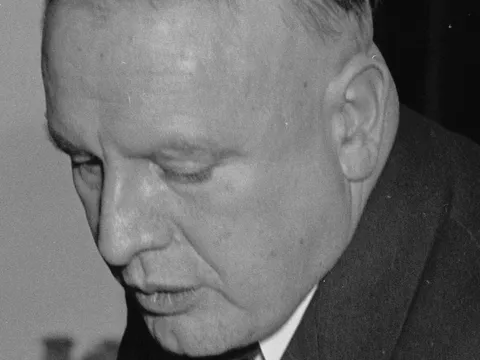 PeopleHarry J. AnslingerThe first head of the US Federal Bureau of Narcotics, from 1930 to 1962. He made cannabis a national scare, drafted the law that ended its legal use, and carried the American position to the League of Nations and the UN.
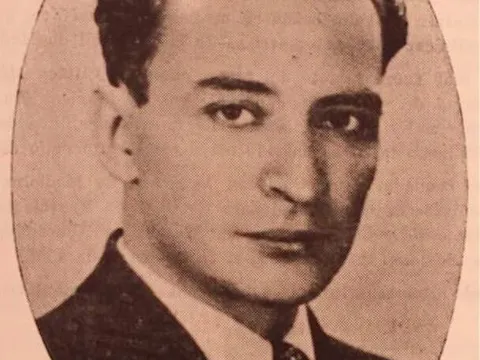 PeopleLeopoldo Salazar ViniegraA Mexican psychiatrist who told the Academy of Medicine in 1938 that the madness and violence blamed on marijuana were a myth, and whose plan to treat addiction as an illness became law for five months in 1940 before the United States forced it out.
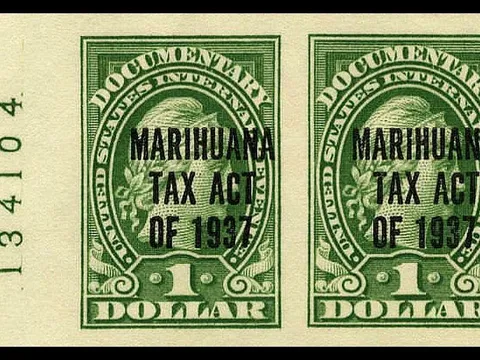 LanguageMarijuanaA Mexican Spanish word of unknown origin. In the 1930s it replaced "cannabis" in American law because it sounded foreign.
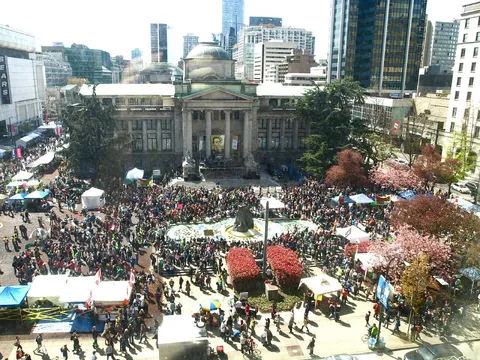 Language420A meeting time of five Californian schoolboys in 1971 that became the worldwide code for cannabis and the date of its yearly demonstrations.
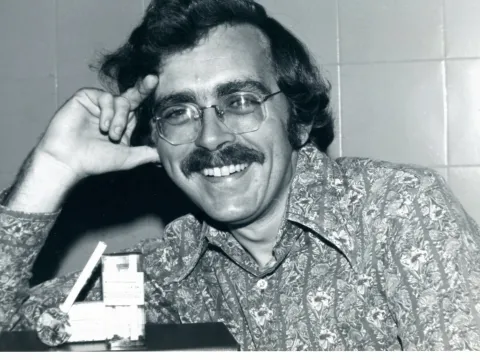 PeopleRobert RandallAn American glaucoma patient whose medical-necessity defence and federal supply became landmarks of the modern medical cannabis movement. With Alice O’Leary, he campaigned to open the same route to other patients.
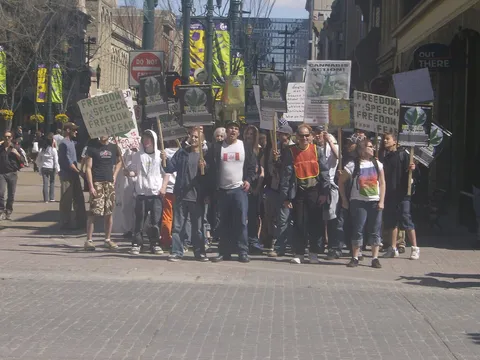 TraditionsThe Global Marijuana MarchOn the first Saturday of May, people in hundreds of cities march for legal cannabis. Brazil's supreme court had to rule that doing so is free speech.
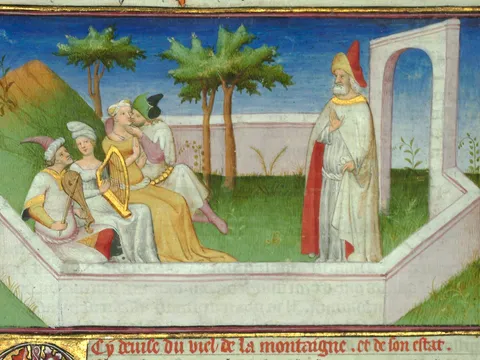 LanguageAssassinA medieval Arabic insult for the Nizari Ismailis of Syria, ḥashīshiyya, that became the European word for a hired killer. Medieval legends of drugged killers, repeated by Marco Polo and given scholarly authority in 1809, later helped make cannabis itself an “assassin of youth”.
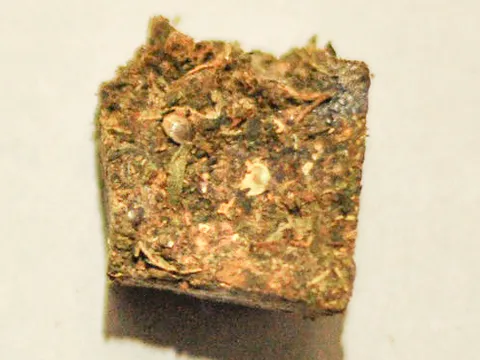 TraditionsBrick weedCannabis plant material compressed into blocks for bulk transport and sale. Known as prensado in Brazil and marihuana prensada in Spanish, it carries the history of illicit supply chains as well as a reputation for low quality.
Show all 40
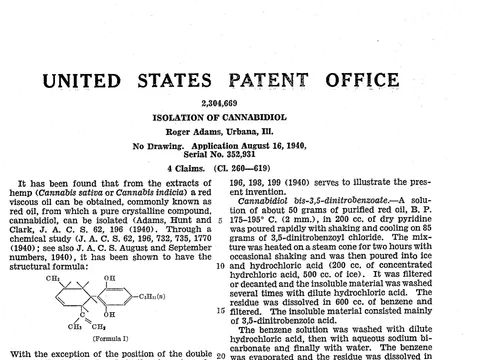 LanguageCBDCannabidiol, the cannabis compound that does not get people high. Studied since 1940, it became a word on shop shelves only after 2018, and the law still cannot agree whether it is a medicine, a food, a drug or none of these.
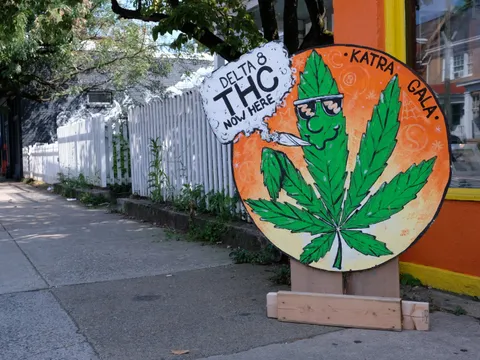 LanguageDelta-8Short for delta-8-THC, a close chemical cousin of the THC in cannabis, made in bulk from legal hemp after 2018 and sold in American petrol stations as a legal high. The word names a loophole as much as a molecule, and the loophole closes in November 2026.
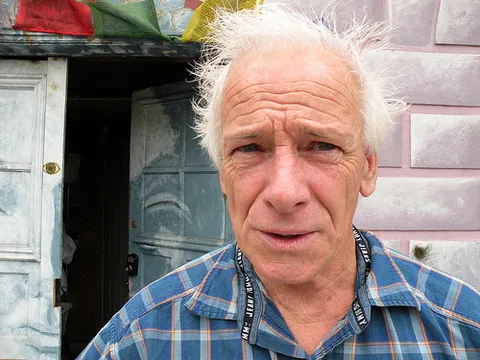 PeopleDennis PeronA San Francisco cannabis seller and gay-rights activist who helped turn care for people with AIDS into the campaign for California’s 1996 medical-cannabis law.
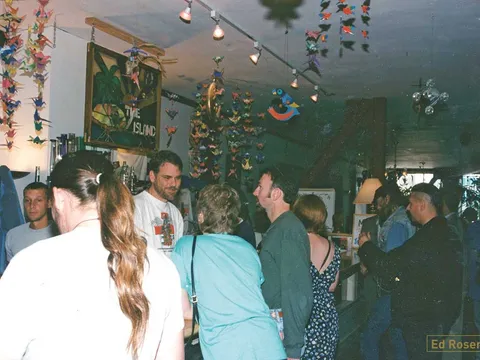 LanguageDispensaryAn old word for a place that hands out medicine, which in the United States became the name of the cannabis shop. The medical word was chosen because, for twenty years, medicine was the only legal ground cannabis could be sold on.
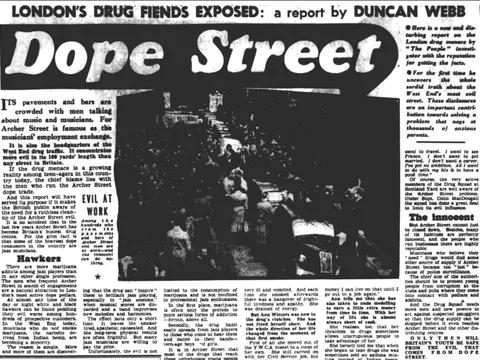 LanguageDopeA word that travelled from thick sauce to narcotic drugs. In British English it often means cannabis, but it has never named cannabis alone.
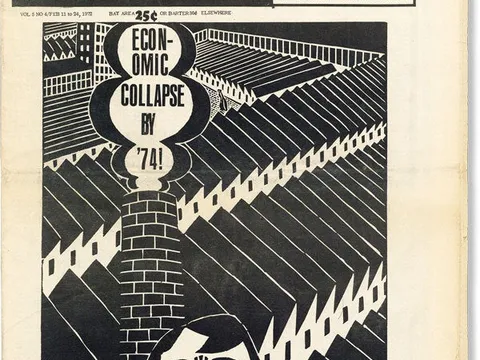 LanguageGrassAmerican slang for cannabis recorded by 1932. An ordinary word for greenery became an alternative to the language of narcotics and menace.
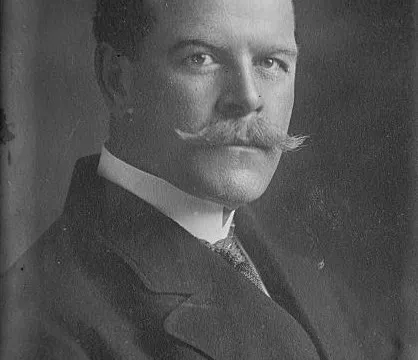 PeopleHamilton WrightThe American opium commissioner who tried to put cannabis in a federal drug bill in 1910. At The Hague in 1912 his country alone backed Italy's call to bring it under international control.
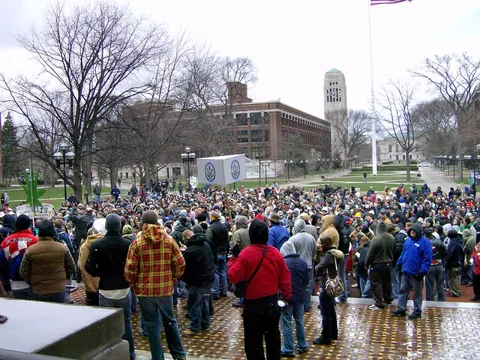 TraditionsHash BashEvery spring since 1972, a crowd has gathered on the University of Michigan's campus to smoke in public and call for legal cannabis.
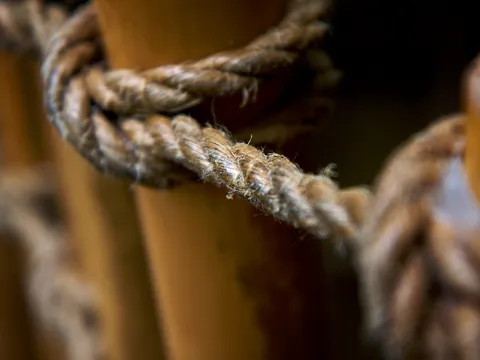 LanguageHempThe old English name for cannabis, its fibre and its crop. Modern law gives it a narrower meaning, defined by THC limits rather than by a separate species.
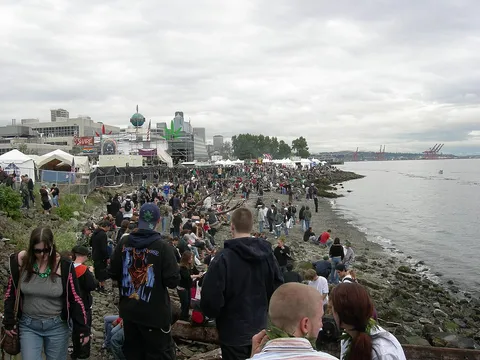 TraditionsHempfestA yearly protest and festival on the Seattle waterfront that grew from 500 people in 1991 to more than 300,000. It helped carry Washington to legal cannabis, and then found it hard to go on.
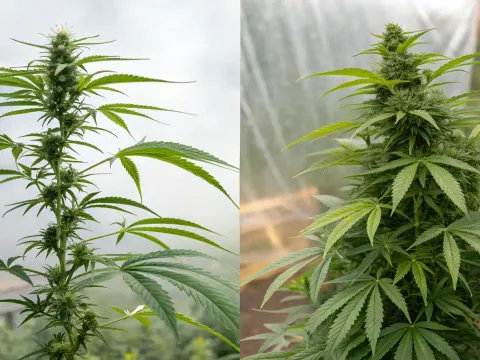 LanguageIndica and sativaTwo Latin names from eighteenth-century botany that became the vocabulary of the modern cannabis shop. Botanists now doubt they name different things at all.
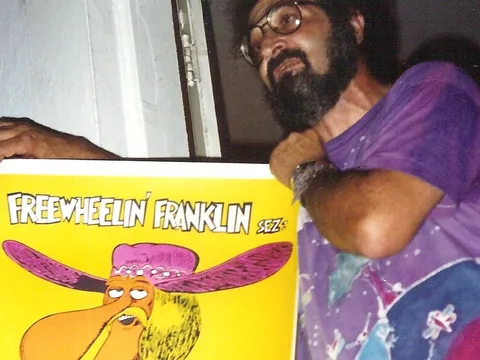 PeopleJack HererAn American activist whose self-published book of 1985, The Emperor Wears No Clothes, joined hemp, medicine and opposition to prohibition into one argument and became the reform movement's most widely read text. Some of its claims about hemp do not stand up.
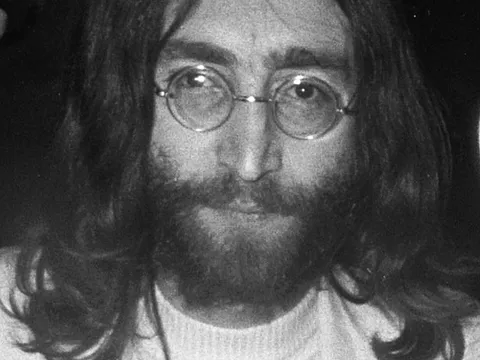 PeopleJohn LennonThe former Beatle who, with Yoko Ono, turned John Sinclair’s cannabis sentence into a concert and a song demanding his release. Their 1971 benefit brought international fame to an existing campaign.
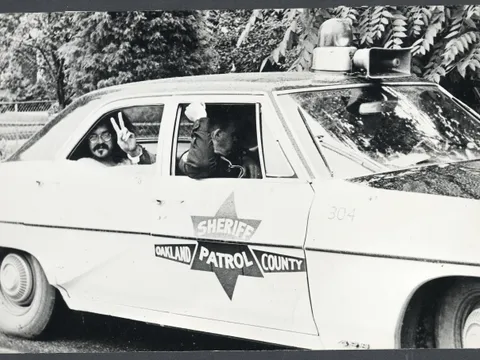 PeopleJohn SinclairA Detroit poet and manager of the MC5 who was sentenced to nine and a half to ten years for two joints. The campaign to free him filled an arena in 1971, and his case ended with Michigan's highest court reversing the conviction.
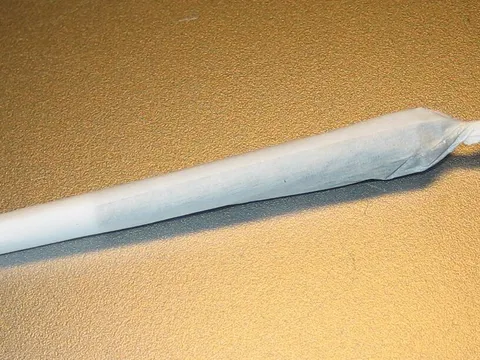 LanguageJointA hand-rolled cannabis cigarette. The word passed from "side room" to "opium den" before it reached its present meaning in the 1930s.
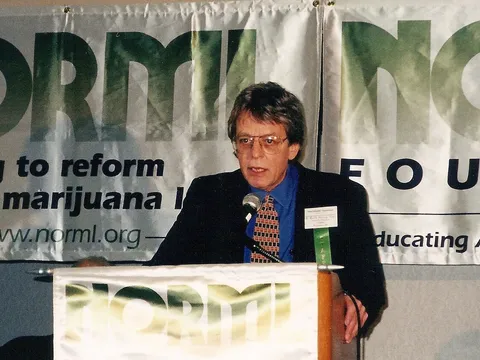 PeopleKeith StroupAn American lawyer who in 1970 founded NORML, a lobby for marijuana smokers modelled on Ralph Nader's consumer campaigns. Eleven states decriminalised during his first decade in charge, which ended when he exposed a White House adviser.
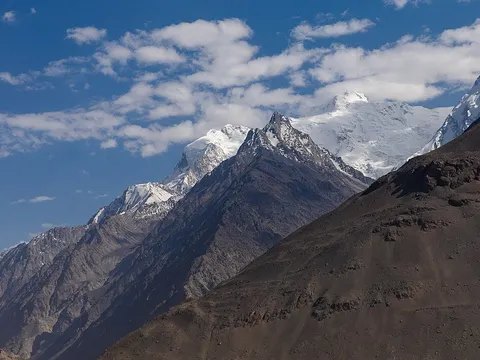 LanguageKushNamed after the Hindu Kush, the mountains whose hashish plants were carried to California in the 1970s. It became the most famous strain name in the world, and, in Sierra Leone, the name of something else entirely.
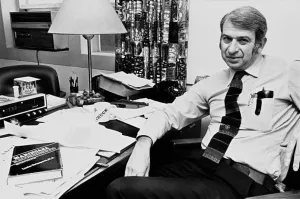 PeopleLester GrinspoonThe Harvard psychiatrist who began by investigating cannabis’s dangers, changed his view, and challenged prohibition through books, legislative testimony and legal evidence.
 PeopleMarc EmeryA Canadian bookseller turned seed merchant, called the Prince of Pot, who broke Canada's ban on cannabis literature, paid tax on his seed sales for seven years, and served four years in an American prison for them.
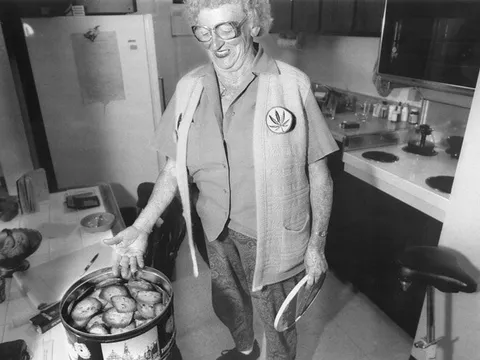 PeopleMary Jane “Brownie Mary” RathbunThe San Francisco hospital volunteer whose cannabis brownies, arrests and work with people with AIDS helped make medical cannabis a public cause.
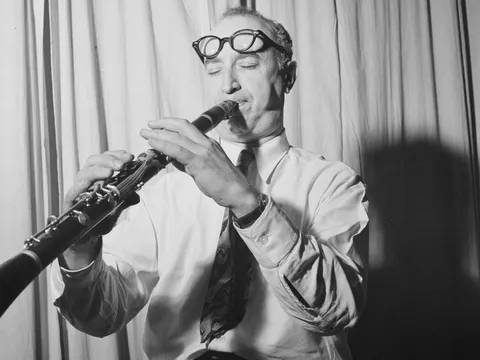 PeopleMezz MezzrowA Chicago clarinettist who became better known for the marijuana he sold to the jazz world than for his playing, so much so that "mezz" became a word for it. Louis Armstrong was among his customers.
 LanguagePakalōlōA Hawaiian name for cannabis, literally “numbing tobacco.” It also appears as pakalolo in Hawaiʻi's local English and Pidgin.
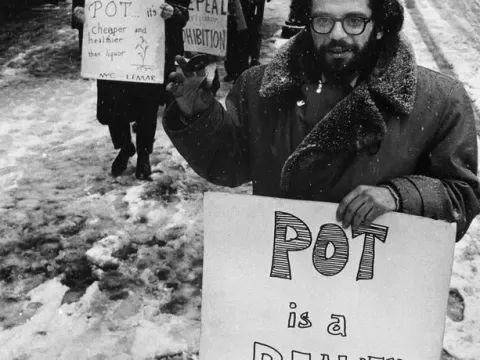 LanguagePotEnglish slang for cannabis, recorded in 1938. Its familiar Mexican-Spanish origin story is plausible but remains disputed.
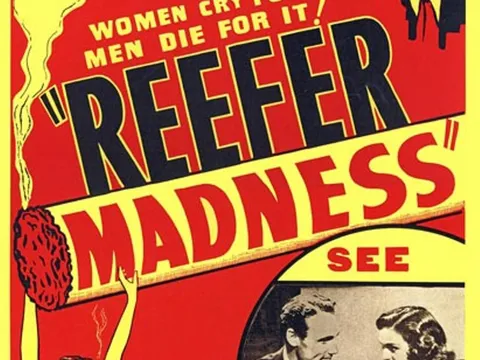 LanguageReeferAmerican slang of the jazz age for a cannabis cigarette, and the word that gave its name to the most famous anti-drug film ever made.
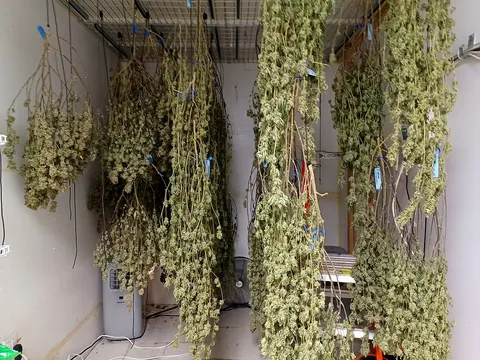 LanguageSinsemillaSpanish for "without seed". The word for unpollinated female plants came north from Mexico in the 1970s and changed what people expected cannabis to be.
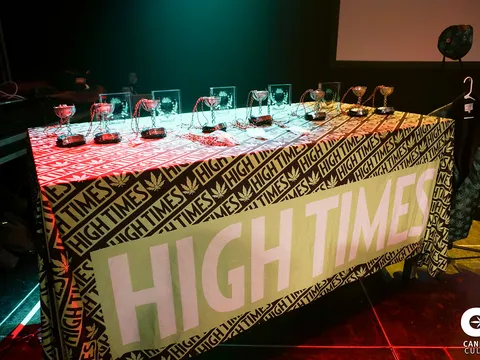 TraditionsThe Cannabis CupA yearly contest in Amsterdam, founded in 1988 by an American magazine, at which judges smoke and score the year's cannabis. It turned plant breeding into a competitive sport and Amsterdam into its capital.
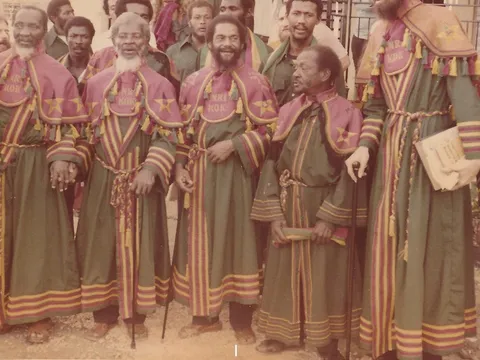 TraditionsThe Ethiopian Zion Coptic ChurchA Jamaican church close to Rastafari that held ganja to be its sacrament, and shipping it to America to be its duty.
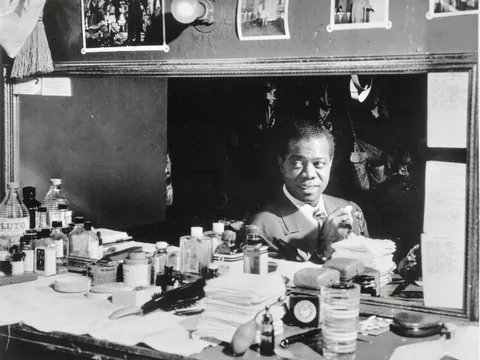 TraditionsThe tea pads of HarlemIn New York between the wars, cannabis was smoked in rented rooms called tea pads, most of them in Harlem, with a radio or a nickelodeon playing. The city's own investigators estimated about 500 and found them calmer than the newspapers said.
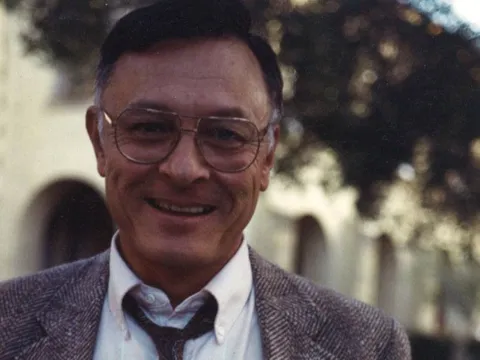 PeopleTod MikuriyaA Berkeley psychiatrist who recovered the forgotten medical literature on cannabis and documented what patients at San Francisco’s Cannabis Buyers’ Club said helped them. His research supported California’s 1996 medical-cannabis law, though the authorship of its broadest clause is disputed, and his practice later drew medical-board discipline.
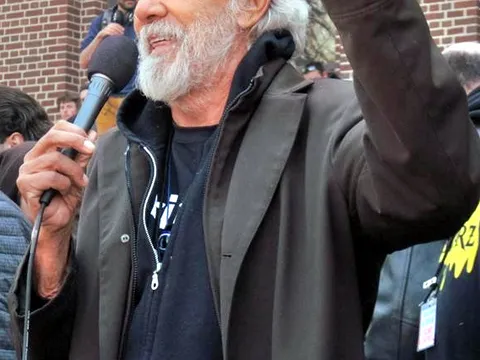 PeopleTommy ChongThe comedian who helped put cannabis users on screen with Cheech Marin, then served a federal prison sentence for a paraphernalia business. His comedy, prosecution and later campaigning connect popular culture with prohibition.
- TraditionsWAMM, the Santa Cruz patients' collectiveA cooperative near Santa Cruz, California, where seriously ill members grew cannabis together and received it free. A federal raid in 2002 turned the city, the county and the collective into plaintiffs against Washington.
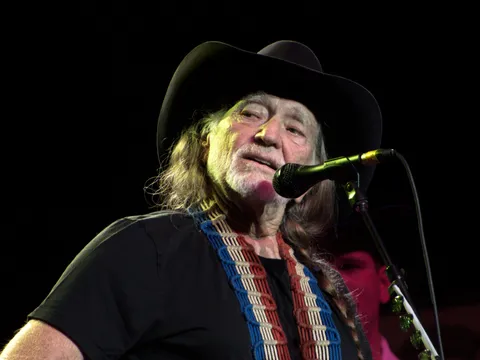 PeopleWillie NelsonThe country musician whose decades of support for NORML made cannabis reform part of his public life. Fundraising and advocacy continued alongside his own encounters with possession enforcement.
These figures are for all of United States; no dataset here is broken down by state yet.
Datasets not part of the score
What other organisations publish about United States, and where it stands among the countries each one covers. Each dataset has a page of its own, with a world map and every country's figure.
Use
UNODC · 2023
Cannabis use
26.38%of people aged 15–64
14% · 201014% · 201114.8% · 201215.4% · 201316.2% · 201416.5% · 201517% · 201618.4% · 201719.4% · 201821.9% · 202022.88% · 202126.62% · 202226.38% · 202320102023 ages 15–64 · survey 2023 · 58,000,000 people · UNODC 2026
Source Survey ages and years vary, and some surveys include children. Rates are not age-standardised; do not compare countries directly.UNODC · 2015
Cannabis use at 15 and 16
25.3%in the past year
Higher than 94% of 49 countriesLowestHighest31.1% ever · 14.8% in the past month · 2015 · ages 15–16, school survey
EUDA · 2024
Cannabis in wastewater
598.50mg of THC-COOH a day per 1,000 people
Higher than 97% of 33 countriesLowestHighestcities measured: 1 · 893,000 people served
WHO, Our World in Data · 2020
Alcohol drunk per person
9.90litres of pure alcohol a year
9.05 · 20009.05 · 20019.11 · 20029.17 · 20039.24 · 20049.30 · 20059.37 · 20069.43 · 20079.44 · 20089.37 · 20099.34 · 20109.39 · 20119.47 · 20129.50 · 20139.47 · 20149.49 · 20159.51 · 20169.55 · 20179.57 · 20189.57 · 20199.90 · 202020002020 Higher than 84% of 187 countriesLowestHighestper person aged 15 or over · 2020 · 9.05 in 2000 · 9.34 in 2010
Law
UNODC · 2024
Police contact for drug use or possession
203per 100,000 people
146 · 2021230 · 202220 · 2023203 · 202420212024 Higher than 78% of 101 countriesFewerMore695,172 people in 2024 · all drugs together
UNODC · 2024
Cannabis seized
79,375kg in 2024
1,196,669 · 20151,017,645 · 2016694,205 · 2017511,661 · 2018432,197 · 2019555,218 · 2020338,272 · 2021288,694 · 2022133,570 · 202379,375 · 202420152024 Higher than 89% of 163 countriesLess seizedMore seized79,375 kg of herb · 1,196,669 kg in 2015 · 555,218 kg in 2020
Society
Pew Research Center · 2025
Is using marijuana morally wrong?
23%call it immoral
Higher than 4% of 25 countriesFewer disapproveMore disapprove24% acceptable · 52% not a moral issue · 3,605 people asked
In the United States the question said “morally wrong” instead of “morally unacceptable”.
OpenAlex · 2025
Research on cannabis
9.3papers per million people
0.0 · 19530.0 · 19550.0 · 19560.0 · 19600.0 · 19610.0 · 19620.0 · 19630.0 · 19640.0 · 19650.0 · 19660.0 · 19670.1 · 19680.1 · 19690.1 · 19700.3 · 19710.3 · 19720.4 · 19730.3 · 19740.3 · 19750.4 · 19760.3 · 19770.3 · 19780.4 · 19790.3 · 19800.4 · 19810.2 · 19820.3 · 19830.4 · 19840.3 · 19850.3 · 19860.4 · 19870.4 · 19880.5 · 19890.6 · 19900.6 · 19910.6 · 19920.5 · 19930.6 · 19940.7 · 19950.7 · 19960.8 · 19971.0 · 19981.0 · 19991.1 · 20001.3 · 20011.4 · 20021.4 · 20031.5 · 20041.8 · 20052.4 · 20062.2 · 20072.7 · 20082.5 · 20092.9 · 20103.0 · 20113.3 · 20123.5 · 20134.3 · 20144.8 · 20154.9 · 20166.2 · 20176.4 · 20187.4 · 20198.3 · 20208.4 · 20218.6 · 20228.3 · 20238.6 · 20249.3 · 202519532025 Higher than 93% of 176 countriesLowestHighest3,171 papers in 2025 · 37 in 1970 · 203 in 1990 · 992 in 2010
Cato and Fraser Institutes · 2023
Human Freedom Index
8.71of 10
8.96 · 20008.75 · 20018.85 · 20028.92 · 20038.90 · 20048.88 · 20058.88 · 20068.88 · 20078.81 · 20088.75 · 20098.81 · 20108.82 · 20118.84 · 20128.87 · 20138.92 · 20148.92 · 20158.86 · 20168.83 · 20178.83 · 20188.78 · 20198.31 · 20208.36 · 20218.67 · 20228.71 · 202320002023 Higher than 91% of 164 countriesLess freeFreerrank #15 of 165 · personal freedom 9.15 · economic freedom 8.10
V-Dem, Our World in Data · 2025
Civil liberties
0.83of 1 in 2025
0.73 · 19000.73 · 19010.73 · 19020.73 · 19030.73 · 19040.73 · 19050.73 · 19060.73 · 19070.73 · 19080.73 · 19090.73 · 19100.73 · 19110.73 · 19120.73 · 19130.73 · 19140.73 · 19150.72 · 19160.71 · 19170.70 · 19180.71 · 19190.72 · 19200.72 · 19210.73 · 19220.73 · 19230.73 · 19240.73 · 19250.73 · 19260.73 · 19270.73 · 19280.73 · 19290.73 · 19300.74 · 19310.74 · 19320.76 · 19330.76 · 19340.76 · 19350.76 · 19360.76 · 19370.76 · 19380.75 · 19390.74 · 19400.73 · 19410.72 · 19420.72 · 19430.72 · 19440.72 · 19450.76 · 19460.77 · 19470.77 · 19480.77 · 19490.77 · 19500.77 · 19510.77 · 19520.77 · 19530.77 · 19540.77 · 19550.77 · 19560.78 · 19570.78 · 19580.78 · 19590.79 · 19600.80 · 19610.80 · 19620.80 · 19630.80 · 19640.81 · 19650.82 · 19660.82 · 19670.84 · 19680.86 · 19690.88 · 19700.88 · 19710.89 · 19720.90 · 19730.90 · 19740.91 · 19750.91 · 19760.92 · 19770.92 · 19780.92 · 19790.93 · 19800.94 · 19810.94 · 19820.94 · 19830.94 · 19840.94 · 19850.94 · 19860.94 · 19870.94 · 19880.94 · 19890.95 · 19900.95 · 19910.95 · 19920.95 · 19930.95 · 19940.95 · 19950.95 · 19960.95 · 19970.95 · 19980.95 · 19990.95 · 20000.95 · 20010.93 · 20020.91 · 20030.91 · 20040.92 · 20050.91 · 20060.92 · 20070.94 · 20080.95 · 20090.95 · 20100.95 · 20110.95 · 20120.95 · 20130.95 · 20140.95 · 20150.95 · 20160.94 · 20170.94 · 20180.93 · 20190.92 · 20200.94 · 20210.94 · 20220.93 · 20230.93 · 20240.83 · 202519002025 Higher than 62% of 175 countriesFewer libertiesMore liberties0.73 in 1925 · 0.80 in 1961 · 0.95 in 1990
Our World in Data, World Bank · 2025
Population
341,784,857people in 2025
74,829,905 · 190090,151,889 · 1910103,898,175 · 1920119,629,770 · 1930129,417,367 · 1940154,202,683 · 1950180,274,556 · 1960207,796,338 · 1970229,858,656 · 1980253,373,387 · 1990281,484,126 · 2000311,062,785 · 2010339,436,156 · 2020341,784,857 · 202519002025 Higher than 98% of 196 countriesLowestHighest74,829,905 in 1900 · 154,202,683 in 1950 · 281,484,126 in 2000
CEPII
Former colonial rulers
Once ruled by United Kingdom; France; Spain
Gallup · 2023
Should marijuana be legal? (United States)
70%say it should be legal
12% · 196915% · 197216% · 197328% · 197725% · 197925% · 198023% · 198525% · 199531% · 200034% · 200134% · 200336% · 200544% · 200946% · 201050% · 201148% · 201258% · 201351% · 201458% · 201560% · 201664% · 201766% · 201864% · 201966% · 201968% · 202068% · 202168% · 202270% · 202319692023 Gallup poll of 2023–10–02 · 12% in 1969 · 31% in 2000
World Bank · 2025
Government effectiveness
77of 100
89 · 199688 · 199891 · 200092 · 200285 · 200385 · 200485 · 200584 · 200683 · 200783 · 200882 · 200982 · 201082 · 201183 · 201284 · 201385 · 201484 · 201584 · 201684 · 201785 · 201883 · 201980 · 202080 · 202181 · 202279 · 202379 · 202477 · 202519962025 Higher than 86% of 195 countriesLowestHighestestimate 1.19 on a scale of −2.5 to 2.5 · 2025 · 91 in 2000 · 84 in 2015
Eurostat · 2026
Minimum wage
€1,070a month
765 · 1999889 · 2000959 · 20011,013 · 2002851 · 2003707 · 2004655 · 2005757 · 2006678 · 2007689 · 2008816 · 2009872 · 2010940 · 2011971 · 2012952 · 2013911 · 20141,035 · 20151,154 · 20161,192 · 20171,048 · 20181,098 · 20191,119 · 20201,024 · 20211,110 · 20221,178 · 20231,137 · 20241,210 · 20251,070 · 202619992026 Higher than 55% of 31 countriesLowestHighestgross, full time · January 2026 · €655 in 2005 · €1,035 in 2015
Transparency International · 2024
Corruption Perceptions Index
65of 100
73 · 201273 · 201374 · 201476 · 201574 · 201675 · 201771 · 201869 · 201967 · 202067 · 202169 · 202269 · 202365 · 202420122024 Higher than 85% of 178 countriesLowestHighest0 highly corrupt, 100 very clean · 2024 · 76 in 2015 · 67 in 2020
Pew Research Center · 2020
Most common religion
Christians
the largest group · 2020
World Bank · 2025
Income per person
$76,931per person
44,384 · 199043,748 · 199144,665 · 199245,293 · 199346,543 · 199447,227 · 199548,442 · 199649,991 · 199751,626 · 199853,481 · 199955,046 · 200055,024 · 200155,443 · 200256,505 · 200358,139 · 200459,612 · 200560,684 · 200661,314 · 200760,806 · 200858,722 · 200959,797 · 201060,253 · 201161,142 · 201261,967 · 201363,027 · 201464,368 · 201565,026 · 201666,164 · 201767,728 · 201869,121 · 201967,407 · 202071,441 · 202172,829 · 202274,352 · 202375,698 · 202476,931 · 202519902025 Higher than 95% of 187 countriesLowestHighestat purchasing power parity, 2021 dollars · 2025 · $44,384 in 1990 · $59,797 in 2010
World Bank · 2024
Development indicators
94.7%use the internet
0.8% · 19901.2% · 19911.7% · 19922.3% · 19934.9% · 19949.2% · 199516.4% · 199621.6% · 199730.1% · 199835.8% · 199943.1% · 200049.1% · 200158.8% · 200261.7% · 200364.8% · 200468% · 200568.9% · 200675% · 200774% · 200871% · 200971.7% · 201069.7% · 201174.7% · 201271.4% · 201373% · 201474.6% · 201585.5% · 201687.3% · 201788.5% · 201889.4% · 201990.3% · 202091.3% · 202192.7% · 202293.5% · 202394.7% · 202419902024 Higher than 86% of 195 countriesLowestHighest80.1% live in towns · 17.9% aged 65+ · life expectancy 78.9 · 2024 · 43.1% in 2000 · 71.7% in 2010
Wikidata · 2002
Parties for legal cannabis
United States Marijuana Party
founded 2002
GDELT · 2025
Cannabis in the news
0.1209%of global news: cannabis articles from here
0.2713% · 20170.3405% · 20180.3449% · 20190.1879% · 20200.1976% · 20210.2182% · 20220.164% · 20230.1417% · 20240.1209% · 202520172025 Higher than 99% of 147 countriesLowestHighest2025 average, 348 days · 0.3405% in 2018 · 0.1976% in 2021
Plant and market
OpenStreetMap · 2026
Cannabis shops on the map
4,699shops mapped
Higher than 98% of 59 countriesFewer shopsMore shops14 per million people · 2026
GBIF · 2026
Records of the cannabis plant
4,308dated records
1 · 18213 · 18384 · 18395 · 18447 · 18498 · 185610 · 186111 · 186312 · 186513 · 186914 · 187016 · 187119 · 187224 · 187327 · 187430 · 187539 · 187643 · 187747 · 187951 · 188054 · 188156 · 188261 · 188363 · 188468 · 188580 · 188690 · 188796 · 1888104 · 1889105 · 1890114 · 1891123 · 1892126 · 1893131 · 1894143 · 1895155 · 1896175 · 1897184 · 1898193 · 1899199 · 1900210 · 1901213 · 1902220 · 1903224 · 1904226 · 1905231 · 1906239 · 1907243 · 1908248 · 1909254 · 1910261 · 1911268 · 1912271 · 1913276 · 1914283 · 1915291 · 1916297 · 1917305 · 1918317 · 1919322 · 1920324 · 1921331 · 1922337 · 1923343 · 1924351 · 1925354 · 1926362 · 1927375 · 1928393 · 1929408 · 1930415 · 1931442 · 1932458 · 1933473 · 1934501 · 1935514 · 1936533 · 1937589 · 1938607 · 1939621 · 1940631 · 1941640 · 1942648 · 1943654 · 1944669 · 1945683 · 1946691 · 1947698 · 1948706 · 1949711 · 1950717 · 1951733 · 1952751 · 1953759 · 1954771 · 1955785 · 1956800 · 1957814 · 1958826 · 1959837 · 1960853 · 1961872 · 1962889 · 1963901 · 1964923 · 1965958 · 1966986 · 19671,034 · 19681,077 · 19691,121 · 19701,171 · 19711,211 · 19721,251 · 19731,328 · 19741,407 · 19751,441 · 19761,485 · 19771,514 · 19781,546 · 19791,584 · 19801,620 · 19811,645 · 19821,663 · 19831,683 · 19841,690 · 19851,712 · 19861,726 · 19871,746 · 19881,764 · 19891,787 · 19901,799 · 19911,820 · 19921,849 · 19931,872 · 19941,918 · 19952,233 · 19962,243 · 19972,266 · 19982,277 · 19992,294 · 20002,309 · 20012,318 · 20022,322 · 20032,327 · 20042,348 · 20052,355 · 20062,359 · 20072,373 · 20082,378 · 20092,388 · 20102,397 · 20112,402 · 20122,412 · 20132,474 · 20142,486 · 20152,496 · 20162,523 · 20172,564 · 20182,644 · 20192,815 · 20203,001 · 20213,212 · 20223,526 · 20233,748 · 20244,088 · 20254,308 · 202618212026 Higher than 98% of 128 countriesLowestHighest372 more without a date · 220 in 2026 · 199 by 1900 · 837 by 1960 · 2,294 by 2000
FAO · 2024
Hemp grown
7,630ha in 2024
5,135 · 20212,772 · 20224,899 · 20237,630 · 202420212024 Higher than 87% of 39 countriesLowestHighest27,412 t of fibre · 1,549 t of seed
ClinicalTrials.gov · 2026
Clinical trials of cannabis medicines
682studies so far
2 · 20003 · 20014 · 20026 · 20037 · 20047 · 20057 · 20069 · 200713 · 200817 · 200922 · 201026 · 201135 · 201238 · 201351 · 201462 · 201590 · 2016137 · 2017183 · 2018226 · 2019288 · 2020381 · 2021460 · 2022516 · 2023576 · 2024645 · 2025682 · 202620002026 Higher than 98% of 50 countriesLowestHighest37 actual starts in 2026 · as of 2026–10–26 · 22 by 2010 · 288 by 2020
Enforcement 2 reports · the Cannabis Enforcement Tracker →
How the law above is applied: raids, seizures, fields destroyed, arrests and sentences, as recorded by the Cannabis Enforcement Tracker, our companion site.
- Arrest146 arrested as online-dealer sweep nets 1.4 tonnes of cannabis
Federal, state and local agencies arrested 146 people across 14 California counties in Operation Central Valley Blues, targeting dealers selling on social media with Meta's help.
- SeizureCalifornia seizes 63,000 pounds of unlicensed cannabis in three months
Between April and June 2026, California's cannabis task force destroyed or seized 63,204 pounds of cannabis and 89,257 plants in ten counties, and arrested 24 people.
History 13 of 13 checked against a source
Entries per decade
Entries that moved the score Context only
Only the entries about California. All 179 entries on the national page →
20101 entry0 score changes
20081 entry0 score changes
20041 entry0 score changes
20021 entry0 score changes
19981 entry0 score changes
19961 entry1 score change
19911 entry0 score changes
19891 entry0 score changes
19811 entry0 score changes
19721 entry0 score changes
19481 entry0 score changes
19471 entry0 score changes
19431 entry0 score changes
Other states 51 scored · national estimate 34
Adults 21+ may carry 2.5 oz, keep 10 oz at home plus the harvest of up to twelve plants lawfully grown there, and buy from licensed shops.
3 oz on you and 5 lb at home. Three mature and three immature plants per adult, and six of each per household. Smoking cannabis is allowed almost anywhere tobacco smoking is.
1.5 oz on you and 5 oz locked at home. Cannabis grown lawfully at the grower's own home does not count toward those limits. Six plants (three mature), twelve per household. Licensed shops since 2023.
Adults 21+ may hold 2 oz of flower in public or 2 lb at home, 8 g concentrate, and a combined 800 mg THC in edibles. Eight plants (four mature); licensed shops operate.
1 oz in public and 10 oz at home; three mature and three immature plants per dwelling. More than 1 oz through 2 oz is a $150 civil penalty. Licensed shops since December 2022.
Public limits are 2 oz of flower, 16 g of extract or 800 mg of edible cannabis. Excess may be stored at home out of public view. Six mature and six immature plants per adult, with twelve mature plants per household.
Since April 2026, adults may hold 2 oz of flower or the Commission-defined product equivalent (10 oz plus lawful homegrown harvest at home); six plants per adult, twelve per household.
Usable marijuana is limited to 2 oz in public and 8 oz per household; extracts have a separate 1 oz limit and licensed-source requirement. Four plants per household.
Adults 21+ may carry 1 oz and grow six plants (three mature), keeping their full lawful harvest where it was grown. Licensed shops since 2016; some offer on-site consumption.
28.5 g of flower (8 g of concentrate) and six plants per household. Shops, delivery and licensed consumption lounges; many cities still ban sales.
Up to 2 oz may be possessed. A person 21 or older may give up to 1 oz, with no payment, to another person 21 or older.
Adults 21+ may carry 1 oz total, including at most 5 g of concentrate, and grow six plants each, twelve per household. Licensed shops since 2021.
Adults 21+ may carry 2.5 oz total, including at most 10 g of concentrate, and grow six mature plants, twelve immature plants and unlimited seedlings. Licensed shops since 2020.
3 oz is legal. Registered growers 21+ may keep six flowering plants, six larger non-flowering plants and six clones. Licensed shops since 2023.
2.5 oz from a licensed dispensary or home growing, and six plants per adult, twelve per household. A gift of up to 2.5 oz, or 15 g of extract, is lawful only at a private home or farm. Licensed shops since August 2024.
A person 21 or older may possess up to 2 oz, or 10 g of hashish, and two mature plus four immature plants. A gift of up to 1 oz, or 5 g of hashish, between adults is legal if it is not advertised.
2 oz may be possessed, and a person 21 or older may give up to 1 oz, with no payment, to another person 21 or older.
Residents 21+ may hold 60 g of flower, visitors 30 g. Only medical patients may grow (five plants); for others a few plants is a $200 civil fine. Licensed shops since 2020.
Adults 21+ may hold 1.5 oz flower, 12 g concentrate or products with 750 mg delta-9-THC. An ordinary household may grow two plants; qualifying medical patients 21+ may grow four. Licensed shops since July 2023.
Adults 21+ may hold one ounce equivalent: 1 oz flower, 8 g concentrate or 800 mg THC in products, with combinations counted together. The regulator limits home growing to Montana residents.
Possession and four plants per household have been legal since 2021. After years of vetoes, a retail law was enacted in 2026; adult-use sales are scheduled for 1 July 2027.
2.5 ounces of usable cannabis may be possessed. A person 21 or older may give that amount, or one-fourth of an ounce of concentrate, without payment, if the gift is not advertised or promoted to the public.
Adults 21+ may hold 1 oz leaf marijuana, 12 g concentrate or products with 750 mg delta-9-THC. Shops opened in 2025; growing at home remains a crime.
Adults 21+ have full possession protection for up to 1 oz of licensed cannabis, subject to lawful-source conditions. Over 1–6 oz is decriminalised but excess can be seized. Shops operate; home growing remains criminal.
1 ounce of useable cannabis is legal for a person 21 or older, and shops have operated since 2014.
Up to ¾ oz ordinarily brings a civil fine; a fourth qualifying offence can be criminal. The only New England state without legal sales; a therapeutic programme serves patients.
A first offence with up to 1 oz is a $300 infraction. Voters approved medical cannabis in 2024; the regulated supply chain remains unfinished as of October 2026.
Under ½ oz marijuana is a criminal infraction; THC uses separate 2 g and 6 g thresholds. Adult 21+ ingestion is not itself an offence under the ingestion statute. Medical cannabis is available.
Outside enhanced school zones, up to 14 g carries at most a $100 fine with no jail. Medical cannabis, including flower, is sold through licensed pharmacies.
Ordinary first possession of up to 30 g brings a $100–250 fine. A driver with more than 1 g in the passenger area can face up to 90 days in jail, even on a first offence. Medical dispensaries serve cardholders.
Up to 3 g of marijuana plant material is a $130 violation. Concentrates have separate criminal penalties, including felonies from ⅛ oz. Card holders have a medical programme.
The ordinary no-active-jail tier covers up to ½ oz of marijuana plant material or 1/20 oz of hashish. Larger resin quantities and isolated THC can be felonies. No state medical programme; Cherokee tribal law is separate.
Under 4 oz is ordinarily a misdemeanour. With four qualifying prior possession convictions, 1–4 oz is a felony. Medical dispensaries serve card holders.
Up to 20 g of flower is a misdemeanour; unauthorised resin or concentrates can be a felony at any weight.
Without a card, possession is a misdemeanour. The medical programme has no list of qualifying conditions.
30 g or less is a misdemeanour with up to 30 days in jail, cut to a small fine in Philadelphia, Pittsburgh and other cities. A large medical programme operates.
Under 1 oz is a misdemeanour with up to six months in jail. Medical cannabis is sold through licensed pharmacies; smoking it is not allowed.
Possession carries 90 days to six months and/or a fine. First possession under 15 g must follow the conditional-discharge procedure; dismissal requires successful probation. Medical dispensaries serve card holders.
Up to 8 oz is a misdemeanour capped at 45 days in jail. A medical programme began in 2025; smoking flower is not allowed under it. By 12 October 2026, dispensaries operated in all eleven licensing regions.
Up to 2 oz is a misdemeanour with up to a year in jail, and ingesting cannabis is itself an offence. Medical cannabis is available to card holders.
1 oz or less is a misdemeanour with up to a year in jail, though Atlanta and several cities have cut it to a small fine.
A first offence carries up to six months in jail. A narrow medical programme caps THC per patient.
2 oz or less is a misdemeanour with up to 180 days in jail; several cities no longer enforce it. A restricted low-THC medical programme was widened in 2025.
Possession ordinarily carries up to 180 days. Prior drug convictions and separate marijuana/hash thresholds can make it a felony. No medical programme.
First possession of 1 oz or less can bring 30 days in jail. Above 1 oz can support a felony intent-to-distribute charge; simple possession remains a misdemeanour. No medical programme.
Without a qualifying prior drug conviction, THC possession carries up to six months. An earlier drug conviction can make even a first cannabis case a felony. No medical programme; local penalties vary.
Unauthorised possession is criminal: the first-offence misdemeanour ceilings are 3 oz of plant material, 0.3 g of liquid, or 3 g of powder or pills. Larger amounts can bring a felony. No medical programme.
Possession for personal use is a misdemeanour with up to a year in jail; a second offence is a felony. Licensed medical sales to registered Alabama patients began on 4 June 2026.
No medical programme and no decriminalisation: under 3 oz is a misdemeanour with up to a year in jail and a mandatory minimum fine.
No medical programme. A first possession offence is a misdemeanour with up to six months in jail; a second qualifying offence carries up to a year, and a third is a drug severity level 5 felony.
½ oz or less is a misdemeanour with up to a year in jail. Only low-THC oil is permitted for a few conditions.
- 1Michigan55
- 2New York54
- 3Connecticut53
- 4Minnesota53
- 5Rhode Island53
- 6New Mexico52
- 7Massachusetts51
- 8Oregon51
- 9Alaska50
- 10California50
- 11Colorado50
- 12Arizona49
- 13Maine49
- 14Missouri49
- 15Ohio49
- 16Vermont49
- 17District of Columbia47
- 18Illinois46
- 19Maryland46
- 20Montana46
- 21Virginia46
- 22Nevada45
- 23Delaware41
- 24New Jersey41
- 25Washington40
- 26New Hampshire24
- 27Nebraska22
- 28North Dakota21
- 29Louisiana20
- 30Mississippi20
- 31Hawaii19
- 32North Carolina16
- 33Arkansas14
- 34Florida14
- 35Oklahoma14
- 36Pennsylvania14
- 37Utah14
- 38West Virginia14
- 39Kentucky13
- 40South Dakota13
- 41Georgia12
- 42Iowa9
- 43Texas9
- 44Indiana8
- 45South Carolina8
- 46Wisconsin8
- 47Wyoming7
- 48Alabama7
- 49Idaho6
- 50Kansas6
- 51Tennessee6
Sources hover a number in the text to see its source
- Cited
- 37
- Websites
- 25
- Last reviewed
Most cited
- etymonline.com6
- en.wikipedia.org3
- norml.org3
- ccb.nv.gov2
- colorado.public.law2
- leginfo.legislature.ca.gov2
All 37 sources
- Online Etymology Dictionary — Potarchived
- Online Etymology Dictionary — Reeferarchived
- Online Etymology Dictionary — Grassarchived
- Online Etymology Dictionary — Jointarchived
- Online Etymology Dictionary — Dopearchived
- Online Etymology Dictionary — Marijuanaarchived
- NORML — California laws and penaltiesarchived
- California Legislature — Health and Safety Code § 11362.1Subsection (a)(1)–(2), adults 21+, uncompensated gifts and separate product quantitiesarchived
- Wikipedia — 420 (cannabis culture)archived
- Wikipedia — Brownie Maryarchived
- California Legislature — Health and Safety Code § 11362.5archived
- NORML — State-by-state lawsarchived
- National Conference of State Legislatures — State cannabis lawsarchived
- Wikipedia — Cannabis Social Club (United States section)archived
- Colorado Department of Revenue — Marijuana sales tax, hospitality and sales establishmentsRetail marijuana hospitality and sales establishments sell to consumers and allow consumption on the premisesarchived
- Colorado Revised Statutes § 44-10-609, marijuana hospitality business licence (2024 code, via colorado.public.law)Subsection (1)(a) allows consumption under a local ordinance; subsection (2)(a) forbids sale on the premisesarchived
- Colorado Revised Statutes § 44-10-610, retail marijuana hospitality and sales business licence (2024 code, via colorado.public.law)Subsection (1)(a) authorises sale and consumption on the licensed premises, subject to a local ordinancearchived
- Oregon Health Authority — Indoor Clean Air Act FAQ, April 2025Pages 3–4; private residences, business events and members-only premises.archived
- Nevada Cannabis Compliance Board — approval of cannabis consumption lounge regulations (28 June 2022)archived
- Nevada Cannabis Compliance Board — consumption lounge FAQAB341 of 2021 authorises lounge licences; retail and independent typesarchived
- Las Vegas Sun — Marijuana lounges, weed consumption at special events legal, opinion says (11 September 2017)archived
- MassCannabisControl — CCC unanimously approves final social consumption regulations (December 2025)4-0 vote 11 December 2025; three licence types; first new business models in five yearsarchived
- MJBizDaily — Washington DC permanently bans cannabis clubs (20 April 2016)Council 7-6 vote; permanent ban on private marijuana clubs
- Law Offices of Omar Figueroa — DEA confirms that cannabis seeds, tissue culture and other genetic material are not necessarily controlled under the CSA (letter of 20 December 2022)archived
- Kight on Cannabis — DEA Seed Letter: Triumph or Trap? (13 April 2022)archived
- Foley Hoag — A temporary reprieve for hemp-THC products (September 2026)archived
- Holland & Hart — Cannabis newsletter, April 2026 (federal rescheduling order)archived
- Congressional Research Service — Changes to the Statutory Definition of Hemp (IF13136, updated 28 September 2026)archived
- DLA Piper — New federal restrictions on hemp and hemp-derived products (18 November 2025)
- Morgan Lewis — Post-DEA hearing, broader marijuana rescheduling questions remain (September 2026)
- DEA — DEA releases 2025 National Drug Threat Assessment (15 May 2025)archived
- UNLV Cannabis Policy Institute — Nevada Cannabis Report: Eliminating the Unlicensed Cannabis Market (2025, PDF)archived
- Immigrant Legal Resource Center — Warning for immigrants about medical and legalized marijuana (21 May 2021)archived
- Governors Highway Safety Association — Drug-impaired driving, state laws (updated October 2025)archived
- NORML — FBI: marijuana possession arrests comprised over 20% of all drug-related arrests in 2024 (15 October 2025)archived
- 18 USC 922 — firearm transfers and possessionSubsections (d)(3) and (g)(3)archived
- US Supreme Court — United States v. Hemani, No. 24-1234 (18 June 2026)Majority opinion, printed pages 18–19; narrow as-applied holdingarchived