The story · written by opus-5.5,
Medical cannabis in the United States began with a ballot measure written by activists in San Francisco during the AIDS epidemic. It never said where the cannabis would come from.
From the AIDS wards
Dennis Peron conceived the measure in memory of his partner, Jonathan West, who had used cannabis to ease the symptoms of AIDS. In 1991 San Francisco voters backed a non-binding resolution for medical cannabis with 79 per cent. Bills to the same effect passed the state legislature and were vetoed by Governor Pete Wilson.
So the campaigners went to the voters. The co-authors included a nurse, Anna Boyce, and a psychiatrist, Tod Mikuriya. Three donors, among them George Soros, gave half a million dollars each. Law enforcement and the state’s attorney general opposed it.
On 5 November 1996 Proposition 215, the Compassionate Use Act, passed with 55.6 per cent: 5.38 million votes to 4.30 million.
What it said
- A patient with a doctor’s recommendation, and the patient’s caregiver, are exempt from the state’s laws against possessing and growing cannabis.
- A doctor may not be punished for recommending it.
That was nearly all. The Act set no list of conditions, no quantities and no system of supply. Guidelines of eight ounces and six mature plants came later, as did identity cards, under a 2003 state law.
Washington’s answer
Cannabis remained illegal under federal law. On 30 December 1996 the Clinton administration announced it would prosecute those involved in prescribing it. Doctors sued and won the right to recommend.
Supply was another matter. In 2001 the Supreme Court refused a defence of medical necessity, and in 2005 it held that Congress could criminalise cannabis grown at home under a state law. Federal agents raided dispensaries for years, more than fifty times in 2007 alone, until the Justice Department stepped back in 2009.
What grew from it
Because the law named no supplier, patients formed cooperatives and buyers’ clubs, and these became shops. One study describes the result as cannabis available “to almost anyone who tells a willing physician that discomfort would be lessened”, and the “Californian model” as “something close to de facto legalization”.
Other states followed with medical laws of their own, and voters grew used to legal cannabis. That, more than anything in the text of Proposition 215, prepared the ground for Colorado and Washington in 2012.
In the index the measure raised one score for the United States: access, from 0 to 2.[1][2]
In the cultural atlas
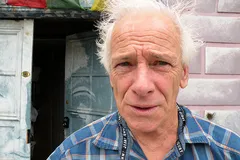 People · American cannabis and gay-rights activist · 1945–2018Dennis PeronA San Francisco cannabis seller and gay-rights activist who helped turn care for people with AIDS into the campaign for California’s 1996 medical-cannabis law.
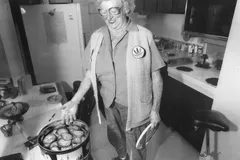 People · American hospital volunteer and medical-cannabis campaigner · 1922–1999Mary Jane “Brownie Mary” RathbunThe San Francisco hospital volunteer whose cannabis brownies, arrests and work with people with AIDS helped make medical cannabis a public cause.
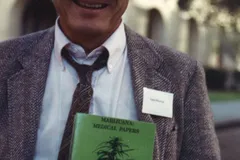 People · American psychiatrist · 1933–2007Tod MikuriyaA Berkeley psychiatrist who recovered the forgotten medical literature on cannabis and documented what patients at San Francisco’s Cannabis Buyers’ Club said helped them. His research supported California’s 1996 medical-cannabis law, though the authorship of its broadest clause is disputed, and his practice later drew medical-board discipline.
Score by segment 0 to 10
- Possession · 25%2 → 2
- Personal cultivation · 25%1 → 1
- Punishment & enforcement · 20%2 → 2
- Sharing & gifting · 10%1 → 1
- Consumption · 10%1 → 1
- Legal access · 10%0 → 2+2
The bar shows the score after the change; the tick marks where it stood before. United States's scores have changed again since.
References
Checked. The date and the event were compared with a source that was read. The score before the change is an editorial estimate.