Mexico
26/100
#22 of 196 worldwide
#10 of 23 in North America
The Supreme Court struck down the ban on personal use in 2021, but Congress never passed a regulatory law. Adults can seek a permit to grow and consume; there is no legal market.
In short all countries →
- Can I carry it?LimitedDomestic immediate personal possession has a 5 g non-prosecution rule; unauthorised border import/export can mean 10–25 years
- Can I grow it?LimitedA few plants are treated far more leniently than dealing
- Can I buy it?LimitedOn prescription only
- Can I use it in public?NoIn private only
- What if I'm caught?Fine or prisonUsually a fine; prison is possible
A rough guide read from the scores and the rules below, not legal advice. The details and the exceptions are in each segment: select an answer to jump to it.
Cannabis in Mexico not part of the score · all 20 datasets ↓
Who uses it
About 1 in 48
people aged 12–65 in Mexico used cannabis in the past year: about 2 million people.
- Past year
- 2.1%
- North America median
- 6.9%
- Aged 15–16, 2011
- 1.3%
UNODC · survey 2016
Source Past-year cannabis use among people aged 12–65. People who used cannabis in the past year, from a 2016 survey, applied to today's population aged 12–65. The population is approximate: the survey ages cut through an age group, or were not recorded and ages 15–64 are used.Survey ages and years vary, and some surveys include children. Rates are not age-standardised; do not compare countries directly.
UNODC World Drug Report 2026, annex table 1.2. Population from the World Bank, aged 12–65. The whole dataset →
Use across North America
17thhighest of 22 surveyed countries
- 🇧🇸 Bahamas3.1%
- 🇭🇹 Haiti2.5%
- 🇲🇽 Mexico2.1%
- 🇸🇻 El Salvador2.0%
- 🇳🇮 Nicaragua1.1%
Past-year use, latest survey of each. Survey years and ages differ. On the map →
What they think of it
“Is using marijuana morally acceptable?”
56% say it is morally unacceptable
- Acceptable 12%
- Not a moral issue 30%
- Depends or no answer 2%
- Unacceptable 56%
The 11th most disapproving of the 25 countries surveyed, where the median is 52%. On the map →
Source Pew Research Center, surveyed January to May 2025, 1,050 adults (topline, question 17g).Cannabis in figures
- Police contact for drug use or possession65per 100,000 people · 2024
- Cannabis seized71,538kg in 2024 · 2024
- Cannabis shops on the map8shops mapped · 2026
- Research on cannabis0.8papers per million people · 2025
- Clinical trials of cannabis medicines4studies so far · 2026
The dot: where it stands among the countries each dataset covers, lowest to highest. All datasets ↓
Score breakdown 26/100 · how the scores are made
Without an authorization, the domestic immediate-personal-consumption rule is that up to 5 g is not prosecuted, and anything over 5 g can still be prosecuted.[1] In 2021 the Supreme Court removed the legal obstacle to adult personal use.[1][2] COFEPRIS may authorize a named adult to acquire seed, sow, grow, harvest, prepare, possess and transport cannabis for that person's own recreational use.[3] The declaration sets no universal gram limit for those authorizations, and it excludes import, trade, supply and distribution.[3][4] The Supreme Court has twice protected individuals held with more than 5 g, in May 2022 and February 2026, telling judges to weigh whether the cannabis was for personal use.[5][6] In 2026 it fell one vote short of removing the 5 g rule for everyone.[6] The 2021 declaration ended the ban on personal use. Judges must weigh personal use over 5 g since 2022. The court fell one vote short in 2026. Unauthorised import or export is a separate offence under article 194(II), carrying ten to twenty-five years and 100–500 day-fines, including temporary entry or transit; the domestic 5 g rule does not cover it.[7]
| Amount | What happens | Punishment | Fine |
| Up to 5 gNot prosecuted; judges must weigh personal use even above 5 g | ToleratedPossession for immediate personal use | — | — |
| Over 5 gProsecutable; authorisation or personal-use finding required | CriminalPossession beyond personal use | — | — |
Growing for one's own recreational use requires a COFEPRIS authorization issued to a named adult.[3] The 2021 declaration covers sowing, cultivation and harvest for that person, and it leaves the rules for acquiring seed to COFEPRIS.[1] It sets no nationwide plant count. Growing without an authorization is a crime, and obtaining legal seeds remains a separate problem.[1] The 2021 declaration ended the ban on personal use.
| Amount | What happens | Punishment | Fine |
| Growing with a COFEPRIS personal-use authorizationNamed adult; sowing, cultivation and harvest for own use; no plant count set | LegalAuthorized personal cultivation | — | — |
| Growing without an authorizationA crime; legal seed acquisition remains unresolved | CriminalUnlawful cultivation | — | — |
Small-scale users are often released, but extortion and arbitrary detention over possession are widely reported.[2] Possession above the thresholds and any supply are federal crimes with prison.[4] Judges must weigh personal use over 5 g since 2022.
There are no legal recreational sales or licensed dispensaries.[4] A narrow medical route permits prescribed cannabis medicines, including personal imports with prior COFEPRIS approval.[9] Unlicensed members-only shops and clubs operate through local tolerance, injunctions or purported gifts, but they are not a lawful retail market.[10] Medical use was regulated in 2021.
Context not part of the score · every country, by topic →
Partly lawful, with no market. Adults may seek a COFEPRIS authorization to grow and consume for personal use, and up to 5 g is not prosecuted.[3][1] There are no legal recreational sales or licensed dispensaries; unlicensed shops and clubs operate through tolerance, injunctions or purported gifts.[4][10] The 2021 declaration ended the ban on personal use.
Medical cannabis was legalised in 2017 and regulations were issued in 2021, allowing prescription and import of approved products.[4] Availability is limited, with a handful of registered products; low-THC and CBD products are sold, though the regulator seized 1,811 CBD items from a national chain in July 2023 as outside health rules.[4][11] Medical use was legalised in 2017. Medical use was regulated in 2021.
No law provides for cannabis clubs, and Congress has never passed the regulation the Supreme Court called for, so clubs work in a grey zone across the country.[10] They lean on the constitutional freedom of association and on members' personal permits or court injunctions, which one drug-policy researcher calls a semi-legal backing that does not cover any sale.[12] The first, Club Xochipilli, opened in Mexico City in December 2015 after the court's first ruling.[10] Because clubs are private, barely advertise and are unregistered, nobody can count them, but specialists describe a boom, with[10][13] chains now present in Mexico City, the State of Mexico, Baja California and Quintana Roo, and clubs in Guadalajara.[13] Typically a member registers with official ID and pays a daily, monthly or yearly fee; cannabis is handed over as a gift or against a 'donation' converted into points, and some clubs ask for an injunction or a prescription.[13][12] Authorities mostly tolerate them, which researchers call selective inaction; clubs are short-lived, supply often comes from the illegal market, and raids, though reported as rare, still happen.[10][13]
After the Supreme Court's 2021 ruling an adult can apply to the health regulator COFEPRIS for a personal-use permit, which covers acquiring seed, sowing, growing and harvesting.[14] The regulator was left to define how seed may be acquired, and the permit does not allow importing, selling or distributing, so there is no legal seed trade.[14][10] The health regulator still treats cannabis seeds as narcotics under the health law.[14] In practice, street stands on some major avenues sell plants and seeds openly.[10]
Industrial hemp licences exist on paper under the 2021 regulations, but with no commercial growing reported; adult-use production stays banned.[9][15]
Medical and industrial licences exist on paper since 2021 regulations; adult-use commercial production is not permitted.[9][4][15]
Figures reported by the government to the UN drugs office record 71,538 kg of herbal cannabis seized in 2024, against 72,873 kg in 2023.[16] The UN publishes them as kilogram equivalents, and countries count seizures differently, so the figures are not comparable across borders.[16]
There is no legal recreational market. COFEPRIS may authorise a named adult for personal use; those authorisations exclude importation and supply to others.[1][3] The domestic 5 g immediate-personal-possession non-prosecution rule does not protect unauthorised import or export: bringing recreational cannabis across the border, even temporarily or in transit, can trigger article 194(II), carrying ten to twenty-five years and 100–500 day-fines.[7] Prescribed medicines have separate health/import requirements; product classification and the applicable authorisation must be checked before travel.[9]
The rule shown here applies to federal highways and bridges; state and municipal traffic rules require separate checks.[17] Federal regulation article 93, replaced by the decree published on 13 August 2026 and effective the following day, prohibits[18] driving in a state of psychophysical alteration or ingestion of alcohol, narcotic or psychotropic substances, including medicines affecting driving.[18] A prescription does not exempt the driver.[18] The amended article sets a fine of fifty to fifty-five daily quota units; these units are not a fixed peso amount.[18] The National Guard refers the driver to the competent authority and informs the licence issuer of the infringement.[18] Drivers must submit to drug-detection tests requested by authorised transport medical personnel or National Guard personnel conducting the tests.[18] The verified federal text does not specify a numerical THC allowance or an automatic nationwide cannabis-specific licence-ban duration.[18] This ingestion-based wording must not be described as requiring proof of impaired control alone, or as a verified laboratory rule penalising any trace of THC.[18]
Mexico's statistics office does not separate cannabis from other drugs. At the end of 2023, 9.4% of the 232,003 people in prison, more than 21,000, were held for drug offences: 14,867 for street-level dealing, a category that takes in many cases of simple possession, and 7,021 for trafficking.[19] Rates in state prisons were highest in Durango, Sonora and Chihuahua.[19]
The permit creates a record of your use with a federal agency. Cases under 5 g are closed without a conviction.[8][4] Unauthorised international import/export has a separate ten-to-twenty-five-year statutory range; a small domestic personal-possession allowance does not exempt crossing the border.[7]
Mexico gave the world the words. Marijuana is Mexican Spanish, and in the 1930s American law took it up precisely because it sounded foreign.[20] Mota, Mexican and Central American slang since the nineteenth century, and sinsemilla, the seedless technique that came north in the 1970s, travelled the same route.[21][22] At home the plant could be sacred: in Otomí communities La Santa Rosa is kept on an altar, shared in ceremony and called the Lady-Flower.[23] And Mexican science talked back early — in 1938 psychiatrist Leopoldo Salazar Viniegra told the Academy of Medicine that the madness blamed on marijuana was a myth, and his treatment-not-punishment regulation became law for five months in 1940.[24] Salazar called the marijuana madness a myth in 1938. Dispensaries opened under the 1940 regulation. The Senate sit-in garden lasted until 2023.
Taking cannabis into or out of Mexico is a separate offence from possessing it, normally charged as smuggling or trafficking, with far heavier penalties. That holds almost everywhere, including between two places where cannabis is legal.
The rules that allow or tolerate small amounts inside Mexico do not cover the border, an airport or the post.
A prescription or medical card from another country is generally not recognised. Travellers who need a cannabis-based medicine should ask Mexico's embassy before travelling.[25]
General guidance that applies to almost every country, not a check of Mexico's customs rules.
Culture the atlas →
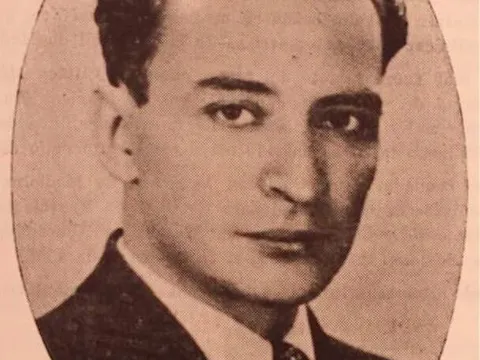 PeopleLeopoldo Salazar ViniegraA Mexican psychiatrist who told the Academy of Medicine in 1938 that the madness and violence blamed on marijuana were a myth, and whose plan to treat addiction as an illness became law for five months in 1940 before the United States forced it out.
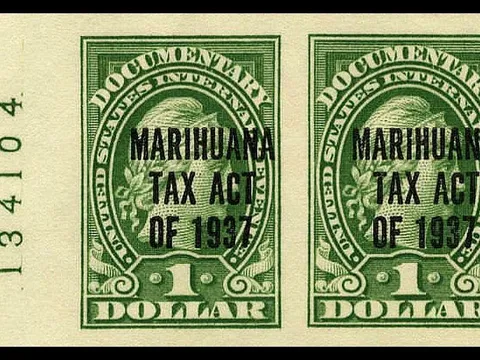 LanguageMarijuanaA Mexican Spanish word of unknown origin. In the 1930s it replaced "cannabis" in American law because it sounded foreign.
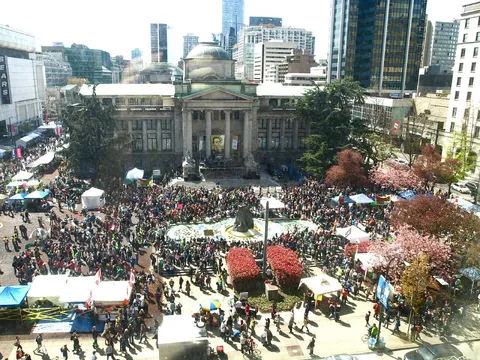 Language420A meeting time of five Californian schoolboys in 1971 that became the worldwide code for cannabis and the date of its yearly demonstrations.
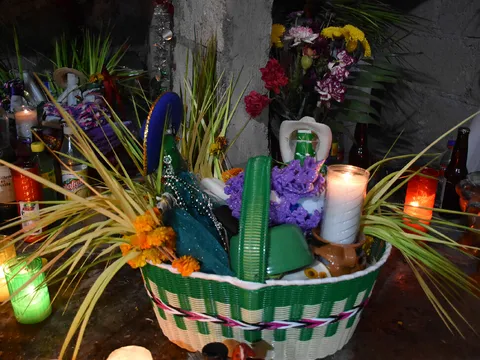 TraditionsLa santa rosaIn Indigenous communities of eastern Mexico, cannabis was cared for on an altar, shared in ceremonies and understood as a sacred presence. An ethnographer documented the practice in 1953; among the Otomí it is still called the Lady-Flower.
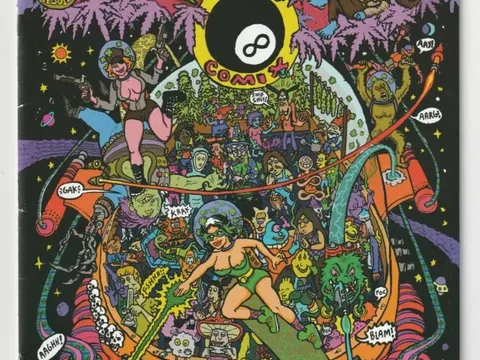 LanguageMotaMexican and Central American Spanish for marijuana since at least the end of the nineteenth century. In older Spanish it is a speck or a tuft of fluff; how it came to mean the plant is unknown.
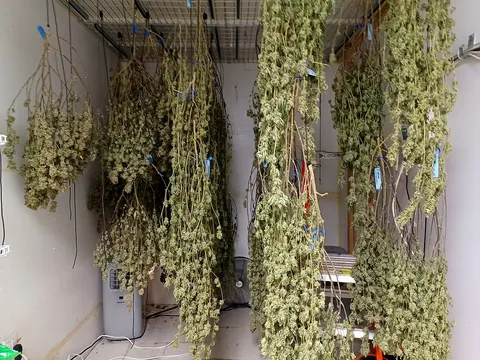 LanguageSinsemillaSpanish for "without seed". The word for unpollinated female plants came north from Mexico in the 1970s and changed what people expected cannabis to be.
Did you know? all cases →
1940 · Mexico
For five months in 1940 Mexico, following the ideas of the psychiatrist Leopoldo Salazar Viniegra, let doctors prescribe drugs to users through state dispensaries. The United States cut off its exports of medical narcotics, and Mexico suspended the rule.
The full story →2011 · Mexico
In 2011 US troops watching a border camera saw smugglers in Mexico firing packages of cannabis over the fence with a catapult on a trailer. Mexican soldiers seized it, with 45 pounds of marijuana.
The full story →Words · Spanish
In old Spanish a mota is a speck or a tuft of fluff left over from making linen. Since the end of the nineteenth century, in Mexico, it has meant marijuana; nobody knows how.
Read the entry →
Datasets not part of the score
What other organisations publish about Mexico, and where it stands among the countries each one covers. Each dataset has a page of its own, with a world map and every country's figure.
Use
UNODC · 2016
Cannabis use
2.1%of people aged 12–65
1% · 20081.2% · 20112.1% · 201620082016 ages 12–65 · survey 2016 · 2,000,000 people · UNODC 2026
Source Survey ages and years vary, and some surveys include children. Rates are not age-standardised; do not compare countries directly.UNODC · 2011
Cannabis use at 15 and 16
1.3%in the past year
Higher than 0% of 49 countriesLowestHighest2.4% ever · 2011 · ages 15–16
WHO, Our World in Data · 2020
Alcohol drunk per person
4.79litres of pure alcohol a year
6.16 · 20006.16 · 20016.10 · 20026.09 · 20036.12 · 20046.19 · 20055.93 · 20065.67 · 20075.40 · 20085.33 · 20095.23 · 20105.05 · 20114.92 · 20124.87 · 20134.98 · 20145.15 · 20155.38 · 20165.54 · 20175.72 · 20185.72 · 20194.79 · 202020002020 Higher than 53% of 187 countriesLowestHighestper person aged 15 or over · 2020 · 6.16 in 2000 · 5.23 in 2010
Law
UNODC · 2024
Police contact for drug use or possession
65per 100,000 people
78 · 202263 · 202365 · 202420222024 Higher than 57% of 101 countriesFewerMore86,292 people in 2024 · all drugs together
UNODC · 2024
Cannabis seized
71,538kg in 2024
1,242,354 · 2015840,894 · 2016400,317 · 2017230,990 · 2018218,565 · 2019157,738 · 202091,336 · 202170,842 · 202272,873 · 202371,538 · 202420152024 Higher than 88% of 163 countriesLess seizedMore seized71,538 kg of herb · 1,242,354 kg in 2015 · 157,738 kg in 2020
Society
Pew Research Center · 2025
Is using marijuana morally wrong?
56%call it immoral
Higher than 56% of 25 countriesFewer disapproveMore disapprove12% acceptable · 30% not a moral issue · 1,050 people asked
OpenAlex · 2025
Research on cannabis
0.8papers per million people
0.0 · 19800.0 · 19880.0 · 19920.0 · 19930.0 · 19940.0 · 19950.0 · 19960.0 · 19980.0 · 20000.0 · 20010.0 · 20020.1 · 20030.0 · 20040.1 · 20050.1 · 20060.1 · 20070.1 · 20080.1 · 20090.2 · 20100.1 · 20110.2 · 20120.2 · 20130.2 · 20140.2 · 20150.3 · 20160.5 · 20170.4 · 20180.5 · 20190.5 · 20200.7 · 20210.6 · 20220.7 · 20230.7 · 20240.8 · 202519802025 Higher than 48% of 176 countriesLowestHighest112 papers in 2025 · 21 in 2010
Cato and Fraser Institutes · 2023
Human Freedom Index
6.72of 10
7.04 · 20007.25 · 20017.31 · 20027.31 · 20037.37 · 20047.39 · 20057.37 · 20067.31 · 20077.21 · 20086.98 · 20096.95 · 20106.86 · 20116.82 · 20126.81 · 20136.84 · 20146.87 · 20156.80 · 20166.79 · 20176.79 · 20186.79 · 20196.57 · 20206.56 · 20216.66 · 20226.72 · 202320002023 Higher than 45% of 164 countriesLess freeFreerrank #91 of 165 · personal freedom 6.58 · economic freedom 6.91
V-Dem, Our World in Data · 2025
Civil liberties
0.63of 1 in 2025
0.31 · 19000.31 · 19010.31 · 19020.31 · 19030.31 · 19040.31 · 19050.31 · 19060.31 · 19070.31 · 19080.31 · 19090.31 · 19100.35 · 19110.35 · 19120.27 · 19130.27 · 19140.29 · 19150.32 · 19160.32 · 19170.33 · 19180.33 · 19190.32 · 19200.36 · 19210.36 · 19220.36 · 19230.36 · 19240.35 · 19250.32 · 19260.32 · 19270.32 · 19280.34 · 19290.39 · 19300.39 · 19310.40 · 19320.41 · 19330.42 · 19340.43 · 19350.43 · 19360.43 · 19370.43 · 19380.46 · 19390.48 · 19400.47 · 19410.47 · 19420.47 · 19430.47 · 19440.47 · 19450.47 · 19460.47 · 19470.47 · 19480.47 · 19490.47 · 19500.47 · 19510.47 · 19520.47 · 19530.49 · 19540.49 · 19550.49 · 19560.49 · 19570.47 · 19580.47 · 19590.47 · 19600.47 · 19610.47 · 19620.47 · 19630.46 · 19640.46 · 19650.46 · 19660.46 · 19670.46 · 19680.47 · 19690.48 · 19700.48 · 19710.49 · 19720.49 · 19730.49 · 19740.49 · 19750.50 · 19760.56 · 19770.57 · 19780.57 · 19790.57 · 19800.58 · 19810.58 · 19820.58 · 19830.58 · 19840.58 · 19850.58 · 19860.58 · 19870.58 · 19880.60 · 19890.60 · 19900.61 · 19910.63 · 19920.64 · 19930.65 · 19940.67 · 19950.67 · 19960.67 · 19970.68 · 19980.68 · 19990.71 · 20000.71 · 20010.71 · 20020.71 · 20030.71 · 20040.71 · 20050.69 · 20060.69 · 20070.69 · 20080.69 · 20090.68 · 20100.68 · 20110.69 · 20120.68 · 20130.67 · 20140.69 · 20150.69 · 20160.70 · 20170.72 · 20180.71 · 20190.70 · 20200.68 · 20210.67 · 20220.67 · 20230.63 · 20240.63 · 202519002025 Higher than 37% of 175 countriesFewer libertiesMore liberties0.35 in 1925 · 0.47 in 1961 · 0.60 in 1990
Our World in Data, World Bank · 2025
Population
131,946,900people in 2025
13,261,087 · 190014,503,032 · 191014,579,605 · 192016,689,077 · 193019,982,850 · 194027,587,941 · 195036,724,614 · 196050,814,958 · 197067,300,338 · 198082,820,170 · 199098,625,553 · 2000113,623,898 · 2010126,799,053 · 2020131,946,900 · 202519002025 Higher than 94% of 196 countriesLowestHighest13,261,087 in 1900 · 27,587,941 in 1950 · 98,625,553 in 2000
CEPII
Former colonial rulers
Once ruled by Spain
World Bank · 2025
Government effectiveness
49of 100
43 · 199653 · 199853 · 200045 · 200246 · 200347 · 200449 · 200550 · 200649 · 200755 · 200857 · 200954 · 201057 · 201159 · 201259 · 201356 · 201456 · 201556 · 201654 · 201753 · 201853 · 201953 · 202052 · 202150 · 202250 · 202349 · 202449 · 202519962025 Higher than 42% of 195 countriesLowestHighestestimate -0.18 on a scale of −2.5 to 2.5 · 2025 · 53 in 2000 · 56 in 2015
Transparency International · 2024
Corruption Perceptions Index
26of 100
34 · 201234 · 201335 · 201431 · 201530 · 201629 · 201728 · 201829 · 201931 · 202031 · 202131 · 202231 · 202326 · 202420122024 Higher than 20% of 178 countriesLowestHighest0 highly corrupt, 100 very clean · 2024 · 31 in 2015 · 31 in 2020
Pew Research Center · 2020
Most common religion
Christians
the largest group · 2020
World Bank · 2025
Income per person
$21,912per person
17,170 · 199017,512 · 199117,796 · 199217,971 · 199318,423 · 199417,028 · 199517,776 · 199618,738 · 199719,573 · 199819,793 · 199920,470 · 200020,078 · 200119,745 · 200219,701 · 200320,127 · 200420,277 · 200520,966 · 200621,102 · 200720,993 · 200819,386 · 200920,058 · 201020,458 · 201120,899 · 201220,805 · 201321,070 · 201421,409 · 201521,578 · 201621,778 · 201721,998 · 201821,704 · 201919,728 · 202020,783 · 202121,392 · 202221,865 · 202321,970 · 202421,912 · 202519902025 Higher than 58% of 187 countriesLowestHighestat purchasing power parity, 2021 dollars · 2025 · $17,170 in 1990 · $20,058 in 2010
World Bank · 2024
Development indicators
83.1%use the internet
0% · 19900% · 19910% · 19920% · 19930% · 19940.1% · 19950.2% · 19960.6% · 19971.3% · 19981.9% · 19995.1% · 20007% · 200111.9% · 200212.9% · 200314.1% · 200417.2% · 200519.5% · 200620.8% · 200721.7% · 200826.3% · 200931.1% · 201037.2% · 201139.8% · 201243.5% · 201344.4% · 201457.4% · 201559.5% · 201653% · 201756.7% · 201869.6% · 201971.5% · 202075.6% · 202178.6% · 202281.2% · 202383.1% · 202419902024 Higher than 55% of 195 countriesLowestHighest79.8% live in towns · 8.2% aged 65+ · life expectancy 75.3 · higher education 48.2% · 2024 · 5.1% in 2000 · 31.1% in 2010
GDELT · 2025
Cannabis in the news
0.0174%of global news: cannabis articles from here
0.017% · 20170.0186% · 20180.0153% · 20190.0124% · 20200.0121% · 20210.0132% · 20220.0128% · 20230.0119% · 20240.0174% · 202520172025 Higher than 98% of 147 countriesLowestHighest2025 average, 348 days · 0.0186% in 2018 · 0.0121% in 2021
Plant and market
OpenStreetMap · 2026
Cannabis shops on the map
8shops mapped
Higher than 59% of 59 countriesFewer shopsMore shops0.1 per million people · 2026
GBIF · 2026
Records of the cannabis plant
210dated records
1 · 18962 · 19003 · 19134 · 19357 · 19658 · 197312 · 198014 · 198216 · 198719 · 199020 · 199127 · 199328 · 199430 · 199531 · 199632 · 200136 · 200237 · 200438 · 200843 · 201044 · 201245 · 201346 · 201449 · 201651 · 201760 · 201879 · 201991 · 2020117 · 2021134 · 2022155 · 2023180 · 2024205 · 2025210 · 202618962026 Higher than 82% of 128 countriesLowestHighest6 more without a date · 5 in 2026 · 2 by 1900
ClinicalTrials.gov · 2026
Clinical trials of cannabis medicines
4studies so far
2 · 20112 · 20122 · 20132 · 20142 · 20152 · 20162 · 20172 · 20182 · 20192 · 20203 · 20213 · 20223 · 20233 · 20244 · 20254 · 202620112026 Higher than 42% of 50 countriesLowestHighest0 actual starts in 2026 · as of 2026–10–26 · 2 by 2020
Enforcement 1 report · the Cannabis Enforcement Tracker →
How the law above is applied: raids, seizures, fields destroyed, arrests and sentences, as recorded by the Cannabis Enforcement Tracker, our companion site.
- EradicationNavy destroys 56,000 marijuana plants on five plots in La Yesca
Mexican navy personnel found and destroyed about 56,000 suspected marijuana plants on five plots covering more than 6,000 square metres in La Yesca, Nayarit, during patrols on 23 and 24 October.
History 43 of 43 checked against a source
Score and entries per decade
26 today, from 100 before its first recorded change
This country's score Entries that moved the score Context only
20261 entry0 score changes
20232 entries0 score changes
Tightening ✓
Mexico's health regulator moves against a CBD shop chain
COFEPRIS inspected six Mexico City branches of Paradise, a chain with shops in 25 states linked to former president Vicente Fox, seized 1,811 products and suspended one branch. It said the health law still lists cannabis, its preparations and its seeds as narcotics. The government had said in April that 63 permits to sell cannabis products were issued in the last days of the previous administration.
Debate ✓
Activists end their cannabis camp outside Mexico's Senate
The collectives behind Plantón 420, a protest camp and open cannabis garden set up beside the Senate in early 2020, withdrew after three years. They said the camp had turned into a tolerated green ghetto, that dealers of hard drugs had moved in, and that a regulation law was unlikely under the current government. A second camp at the Estela de Luz was cleared by city workers and police on 23 June 2025.
20221 entry0 score changes
20214 entries2 score changes
20181 entry0 score changes
20172 entries0 score changes
Culture & science ✓
MOTA Comix begins publishing in Mexico
Editorial PirataZ launches an independent Mexican cannabis comic publication. Its publisher describes the project as a space for alternative graphic expression and humour challenging prohibition and the criminalisation of consumers. The title uses established cannabis slang; it does not mark the origin of the word mota.
Medical ✓
Mexico legalises medical cannabis
A reform of the health law allowed medicines containing cannabis. The rules needed to put it into practice were not issued until 2021.
20151 entry0 score changes
20111 entry0 score changes
20091 entry1 score change
19961 entry0 score changes
19941 entry0 score changes
19901 entry0 score changes
19841 entry0 score changes
19771 entry0 score changes
19691 entry0 score changes
19671 entry0 score changes
19531 entry0 score changes
19471 entry0 score changes
19402 entries0 score changes
Tightening ✓ Article
Mexico suspends its health-based drug rule
Five months after it began, Mexico suspended a regulation that had let doctors prescribe controlled doses to people dependent on drugs. The programme principally supplied morphine; the contemporary cannabis proposals described in the historical literature never became law.
Easing ✓ Article
Mexico briefly treats drug use as a health matter
Under President Cárdenas a new federal regulation let doctors prescribe controlled doses to people dependent on drugs and created a state morphine programme. It did not legalise cannabis: the historian Isaac Campos writes that the government's marijuana initiative never advanced beyond research and publicity. The United States pressured Mexico to suspend the rule within months.
19381 entry0 score changes
19311 entry0 score changes
19291 entry0 score changes
19261 entry1 score change
19201 entry1 score change
19171 entry0 score changes
19081 entry0 score changes
18961 entry0 score changes
18912 entries1 score change
Ban ✓
The State of Mexico bans selling marijuana
The State of Mexico prohibited the sale of marijuana, one of a patchwork of state and local bans that preceded the national prohibition of 1920.
Tightening ✓ Article
Mexico places medical cannabis in the pharmacy system
The first of three national sanitary codes, followed by codes in 1894 and 1902, recognised cannabis medicines but restricted them to licensed medical and pharmacy practice. Gatherers could sell marijuana only to pharmacists, and patients needed a physician's prescription. Pharmacies could stock hemp seeds and cannabis products and dispense fixed doses of haschich, tincture, extract and cannabinone.
10091−9 points
18881 entry0 score changes
18822 entries0 score changes
Ban ✓
Oaxaca, under Porfirio Díaz, bans selling marijuana
During his brief term as governor of Oaxaca, Porfirio Díaz prohibited the sale of "Rosa María, known by the common name mariguana", using articles of the state penal code on harmful substances.
Ban ✓
Mexico bars marijuana from its military hospital
After a soldier died falling in the hospital courtyard in delirium attributed to marijuana on 21 May, the army reiterated the ban on bringing marijuana, cards and alcohol into the military hospital. Newspapers reported years of fights and accidents there despite searches of visitors, and officers turned out to be the smugglers. The same year the military in Oaxaca ordered the plant rooted out and its pharmacy sale suppressed after desertions and attacks blamed on marijuana.
18711 entry0 score changes
18691 entry0 score changes
18461 entry0 score changes
17691 entry0 score changes
15501 entry0 score changes
Sources hover a number in the text to see its source
- Cited
- 25
- Websites
- 18
- Last reviewed
- History checked
- 43/43
Most cited
- cannabisfreedom.fyi5
- sidof.segob.gob.mx3
- zetatijuana.com2
- cms.law1
- data.unodc.org1
- dof.gob.mx1
All 25 sources
- Diario Oficial de la Federación — Supreme Court General Declaration of Unconstitutionality 1/2018 (15 July 2021)Paragraphs 91–93, adult personal-use authorizations and the acts they excludearchived
- Transcend Media Service — Supreme Court in Mexico declares cannabis prohibition unconstitutionalarchived
- COFEPRIS — statement on the Supreme Court declaration for recreational self-consumption (7 July 2026)Press release 16/2026; authorizations for named adults, excluding commerce, supply and distributionarchived
- CMS Expert Guide — Cannabis law and legislation in Mexicoarchived
- Zeta Tijuana — SCJN declara inconstitucional penalizar posesión de más de 5 gramos de cannabis (May 2022)archived
- El Imparcial — Suprema Corte falló en contra de cambiar el límite de 5 gramos por un solo voto (February 2026)archived
- Mexico Interior Ministry — Federal Criminal CodeArticles 193–194, especially 194(II): international import/export, including transit; 10–25 years and 100–500 day-finesarchived
- Riviera Maya News — Cofepris clarifies what cannabis self-consumption permits allowarchived
- Diario Oficial de la Federación — Regulation for the medical use of cannabis and its pharmacological derivatives (12 January 2021)archived
- Yucatán Magazine — Cannabis in Mexico faces a cultural turning point (22 August 2025)archived
- Zeta Tijuana — Cofepris clausura Paradise, empresa de cannabis ligada a Vicente Fox (24 July 2023)archived
- El CEO — Los clubes cannábicos, negocios que buscan florecer en México (26 January 2019)archived
- Milenio — Clubes de marihuana en CdMx: del toque en Reforma al lujo en Polanco (30 March 2025)archived
- Telemundo — El consumo recreativo de marihuana se vuelve más fácil en México tras fallo de la Corte (29 June 2021)archived
- GrowerIQ — How to get a cannabis license in Mexicoarchived
- UNODC Data Portal — Drug seizures, reported seizures in kilogram equivalents (World Drug Report data)archived
- Mexico Diario Oficial — Federal Highways and Bridges Traffic Regulations, original textArticle 1: federal highways and bridges jurisdiction; article 93 must be read as replaced in 2026archived
- Mexico Diario Oficial — federal-road traffic amendment published 13 August 2026Replacement article 93; first transitional provision; publication date confirmed on the official note pagearchived
- UnoTV — ¿Cuántas personas están presas en México por narcomenudeo y narcotráfico? Esto dice el Inegi (27 June 2025)archived
- Cannabis Freedom Index — Marijuana (atlas)archived
- Cannabis Freedom Index — Mota (atlas)archived
- Cannabis Freedom Index — Sinsemilla (atlas)archived
- Cannabis Freedom Index — La Santa Rosa (atlas)archived
- Cannabis Freedom Index — Leopoldo Salazar Viniegra (atlas)archived
- International Narcotics Control Board — Travellers carrying medicines containing controlled substances