The story
For a few months in 1940, Mexico replaced part of its punitive response to drug dependence with an unusually direct public-health programme. Doctors could prescribe controlled doses and a government dispensary supplied morphine at low cost. The experiment was brief—but it was not cannabis legalisation.
Treating a patient, not pursuing an offender
President Lázaro Cárdenas signed the revised Federal Regulation on Drug Addiction on 5 January. It was published on 17 February and rejected the existing system of pursuing and reporting people with addictions. The regulation instead treated them as patients who should receive care.
Hospitals and dispensaries were to keep treatment records and supply prescribed narcotics under strict procedures. Doctors received greater freedom to set doses, and official or authorised dispensaries could provide the prescribed drug at cost.
The first dispensary
The first clinic opened on Calle Sevilla in Mexico City on 9 March. Its programme focused on morphine maintenance: a doctor prescribed doses at nominal prices, with the aim of reducing dependence on illicit sellers and, where possible, gradually reducing the dose.
The historical study reports that the clinic treated more than 700 people during its short operation. Its practical work centred on opiate dependence, not a cannabis supply system.
That distinction matters. In Cannabis: Global Histories, historian Isaac Campos writes that psychiatrist Leopoldo Salazar Viniegra also challenged Mexico’s prevailing claims about marijuana. But Salazar’s cannabis effort never advanced beyond research and publicity. The state did not create legal cannabis dispensaries or suspend the cannabis offences established during the 1920s and 1930s.
Pressure from Washington
United States officials regarded the programme as inconsistent with their interpretation of international controls. The Federal Bureau of Narcotics used US export law to block legal narcotic shipments to Mexico. Mexican health officials warned that supplies needed for ordinary medical treatment could soon run out.
After negotiations in Washington, the Mexican government retreated. The official journal published an indefinite suspension on 3 July, and the Sevilla dispensary closed ten days later. The suspension ended the short-lived programme.
Why the index does not move
Mexico’s cannabis score does not move for this episode. Earlier versions of the index treated the general drug-dependence regulation as a cannabis reform; the book’s cannabis-specific account shows that was too broad. The event remains in the history because it explains a notable policy experiment and the contemporary reform debate, but the documented dispensary route supplied morphine rather than cannabis.[1][2][3]
In the cultural atlas
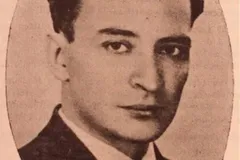
Listed for context. No score change is recorded for Mexico here.
References
- Foro Internacional — Estados Unidos frente a la promulgación y suspensión en México del Reglamento de Toxicomanías de 1940 (2021)archived
- Wikipedia — Cannabis in Mexicoarchived
- Reefer Madness Past and Present: Dr. Leopoldo Salazar Viniegra, Mexico, and the United States, ca. 1938–2018Isaac Campos · In Cannabis: Global Histories, edited by Lucas Richert, James H. Mills · MIT Press · 2021 · pp. 157–181 · ISBN 9780262366137
- Foro Internacional — The United States and the promulgation and suspension in Mexico of the 1940 Regulation of Drug Addiction
Checked. The date and the event were compared with a source that was read.