Senegal
9/100
#134 of 196 worldwide
#34 of 54 in Africa
Personal possession carries two months to one year in prison; trafficking ten to twenty years since 2007.
In short all countries →
- Can I carry it?NoIt is a crime
- Can I grow it?NoIt is a crime
- Can I buy it?NoThere is no legal source
- Can I use it in public?NoNot in public, and even at home the law does not protect it
- What if I'm caught?PrisonPersonal use can lead to prison or compulsory detention
A rough guide read from the scores and the rules below, not legal advice. The details and the exceptions are in each segment: select an answer to jump to it.
Cannabis in Senegal not part of the score · all 15 datasets ↓
Who uses it
About 1 in 36
people aged 15–64 (assumed) in Senegal used cannabis in the past year: about 310,000 people.
- Past year
- 2.8%
- Africa median
- 3.1%
- Aged 15–16, 2019
- 91.0%
UNODC · survey 1999
Source Past-year cannabis use among people aged 15–64 (assumed). People who used cannabis in the past year, from a 1999 survey, applied to today's population aged 15–64. The population is approximate: the survey ages cut through an age group, or were not recorded and ages 15–64 are used. An earlier figure: UNODC's 2026 table has none for this country.Survey ages and years vary, and some surveys include children. Rates are not age-standardised; do not compare countries directly.
An earlier UNODC figure, as collected in Wikipedia's list of annual cannabis use by country. Population from the World Bank, aged 15–64. The whole dataset →
Use across Africa
17thhighest of 28 surveyed countries
- 🇧🇫 Burkina Faso2.9%
- 🇰🇲 Comoros2.9%
- 🇸🇳 Senegal2.8%
- 🇪🇹 Ethiopia2.6%
- 🇸🇴 Somalia2.5%
Past-year use, latest survey of each. Survey years and ages differ. On the map →
Cannabis in figures
- Cannabis seized23,063kg in 2024 · 2024
- Research on cannabis0.8papers per million people · 2025
- Cannabis in the news0.0001%of global news: cannabis articles from here · 2025
The dot: where it stands among the countries each dataset covers, lowest to highest. All datasets ↓
Score breakdown 9/100 · how the scores are made
Neighbours
- 🇬🇲 Gambia9
- 🇬🇳 Guinea9
- 🇬🇼 Guinea-Bissau9
- 🇲🇱 Mali9
- 🇸🇳 Senegal9
- 🇲🇷 Mauritania3
The 1997 Drug Code treats cannabis as a high-risk drug: small quantities bought, possessed or grown for personal consumption fall under Article 109, carrying two months to one year in prison and a fine of three times the drug's value.[1][2] Minors, first-time offenders and people who solemnly undertake not to reoffend may be excused punishment, and courts may order treatment instead of or alongside prison; refusing treatment carries two to five years.[2]
| Amount | What happens | Punishment | Fine |
| Small quantity for personal use (article 109)Fine is three times the drug's value. Waiver and treatment possible | CriminalPersonal use | 2 months – 1 year | — |
Article 8 of the 1997 Drug Code bans growing the cannabis plant anywhere in the country, and obliges landholders to destroy plantations or report them.[1] High-risk growing, production and manufacture carry five to ten years and a fine of three times the value of the drugs seized (Article 95); small personal growing falls under the lighter Article 109 tier.[1][2]
| Amount | What happens | Punishment | Fine |
| Growing high-risk drugs (article 95)Fine is three times the value of the drugs seized | CriminalUnlicensed cultivation | 5–10 years | — |
| Small amount grown for personal use (article 109)Fine is three times the drug's value. Waiver and treatment possible | CriminalPersonal use | 2 months – 1 year | — |
The Code pairs light personal-use bands with very long trafficking sentences, raised to ten to twenty years' forced labour by the 2007 revision.[1] Use persists regardless: gendarmes seized 5,238 kg of cannabis and arrested 1,302 people in 2025, most of them tied to informal-sector distribution networks, as that seizure report records.[3]
Supply of high-risk Table I drugs carries five to ten years and a fine of 2 to 10 million francs, or either alone (Article 97).[1] Trafficking was raised to ten to twenty years' forced labour by the 2007 revision.[1](/history/senegal-trafficking-law-2007/) Giving or offering drugs for another person's own use carries two to five years and a fine of three times the value (Article 99).[1][2]
| Amount | What happens | Punishment | Fine |
| Supply of high-risk drugs (article 97)Prison or a fine, or both. Raised to 10–20 years in 2007 | CriminalTrafficking | 5–10 years | FCFA 2,000,000 – FCFA 10,000,000 |
| Giving or offering for another person's own use (article 99)Fine is three times the drug's value | CriminalSupply to a user | 2–5 years | — |
Use outside a medical prescription is prohibited; drugs found on an illicit user are seized and confiscated by judicial decision even without prosecution (Article 108).[1] Users face the personal-use tier of Article 109.[1][2]
| Amount | What happens | Punishment | Fine |
| Use outside a medical prescriptionConfiscation possible without prosecution. Same tier as possession | CriminalDrug use | 2 months – 1 year | — |
There is no recreational route: unauthorised growing, handling and use are all offences under the Code.[1]
Context not part of the score · every country, by topic →
Cannabis is prohibited: growing is banned everywhere, Table I handling is prohibited, and use outside prescription is an offence.[1] Personal possession, purchase or growing of a small amount carries two months to a year, with waiver for minors, first-timers and sworn undertakings, and courts may order treatment.[1][2] Enforcement is heavy: gendarmes seized 5,238 kg of cannabis and arrested 1,302 people in 2025, most tied to informal-sector distribution networks.[3]
The sources reviewed establish no operating medical cannabis programme.[1]
No cannabis clubs are known, and the law leaves no room for them: growing cannabis and supplying it to another person are both prohibited.[1]
Article 8 of the 1997 Drug Code bans growing the cannabis plant anywhere in the country, and landholders must destroy plantations or report them.[1] The articles read do not mention seeds.[1]
The Code sets no THC line for hemp: cannabis growing is banned everywhere and Table I handling is prohibited, with no fibre or food exception in the provisions reviewed.[1]
No licensed production exists: growing cannabis is banned everywhere, and no licensed cannabis production was found in the sources reviewed.[1]
Figures reported by the government to the UN drugs office record 23,024 kg of herbal cannabis seized in 2024, against 12,738 kg in 2023, and 38.8 kg of cannabis resin seized in 2024, against 23.1 kg in 2023.[4] The UN publishes them as kilogram equivalents, and countries count seizures differently, so the figures are not comparable across borders.[4]
There is no legal recreational supply for anyone.[1] Small-quantity possession for personal use carries two months to a year and a fine of three times the value.[1][2]
Gendarmes seized 5,238 kg of cannabis and arrested 1,302 people in anti-drug operations in 2025, most of them tied to distribution networks in the informal sector, as that seizure report records.[3]
A conviction brings a criminal record.[2] Refusing court-ordered treatment carries two to five years.[2]
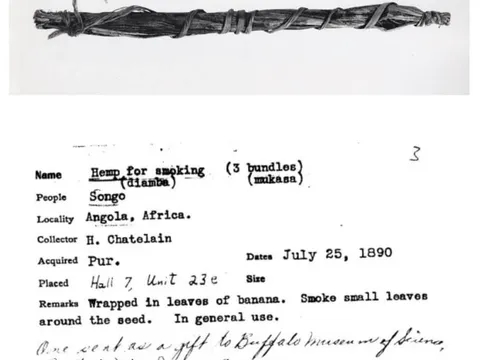
In Senegal cannabis is yamba, grown and smoked pretty much everywhere in the country by the 1950s.[5] French clinicians documented intoxication cases in a 1962 study, kept in the timeline as that study.[5] The atlas traces the wider word in diamba, part of the western word patch running from Côte d'Ivoire to Senegal.[5]
Taking cannabis into or out of Senegal is a separate offence from possessing it, normally charged as smuggling or trafficking, with far heavier penalties. That holds almost everywhere, including between two places where cannabis is legal.
A prescription or medical card from another country is generally not recognised. Travellers who need a cannabis-based medicine should ask Senegal's embassy before travelling.[6]
General guidance that applies to almost every country, not a check of Senegal's customs rules.
Culture the atlas →
Datasets not part of the score
What other organisations publish about Senegal, and where it stands among the countries each one covers. Each dataset has a page of its own, with a world map and every country's figure.
Use
UNODC · 1999
Cannabis use
2.8%of people aged 15–64 (assumed)
survey 1999 · 310,000 people · earlier figure, not in UNODC 2026
Source Survey ages and years vary, and some surveys include children. Rates are not age-standardised; do not compare countries directly.UNODC · 2019
Cannabis use at 15 and 16
90.95%in the past year
Higher than 98% of 49 countriesLowestHighest2019 · ages 15–16
WHO, Our World in Data · 2020
Alcohol drunk per person
0.38litres of pure alcohol a year
0.47 · 20000.47 · 20010.50 · 20020.49 · 20030.47 · 20040.47 · 20050.47 · 20060.48 · 20070.46 · 20080.43 · 20090.41 · 20100.40 · 20110.38 · 20120.37 · 20130.36 · 20140.37 · 20150.39 · 20160.40 · 20170.41 · 20180.41 · 20190.38 · 202020002020 Higher than 11% of 187 countriesLowestHighestper person aged 15 or over · 2020 · 0.47 in 2000 · 0.41 in 2010
Law
UNODC · 2024
Cannabis seized
23,063kg in 2024
5,289 · 20167,031 · 201712,204 · 20183,474 · 201926,152 · 202046,744 · 2021213,903 · 202212,761 · 202323,063 · 202420162024 Higher than 79% of 163 countriesLess seizedMore seized23,024 kg of herb · 39 kg of resin · 26,152 kg in 2020
Society
OpenAlex · 2025
Research on cannabis
0.8papers per million people
0.1 · 20040.1 · 20060.1 · 20090.1 · 20140.1 · 20150.1 · 20160.1 · 20170.1 · 20180.1 · 20200.1 · 20210.1 · 20220.3 · 20230.4 · 20240.8 · 202520042025 Higher than 47% of 176 countriesLowestHighest16 papers in 2025
Cato and Fraser Institutes · 2023
Human Freedom Index
6.49of 10
6.76 · 20006.78 · 20016.86 · 20026.85 · 20036.87 · 20046.84 · 20056.83 · 20066.70 · 20076.65 · 20086.75 · 20096.70 · 20106.70 · 20116.71 · 20126.94 · 20136.93 · 20146.90 · 20156.91 · 20166.89 · 20176.91 · 20186.91 · 20196.74 · 20206.70 · 20216.79 · 20226.49 · 202320002023 Higher than 38% of 164 countriesLess freeFreerrank #102 of 165 · personal freedom 6.73 · economic freedom 6.15
V-Dem, Our World in Data · 2025
Civil liberties
0.81of 1 in 2025
0.31 · 19040.31 · 19050.31 · 19060.31 · 19070.32 · 19080.31 · 19090.31 · 19100.31 · 19110.31 · 19120.31 · 19130.31 · 19140.31 · 19150.31 · 19160.31 · 19170.31 · 19180.31 · 19190.31 · 19200.31 · 19210.31 · 19220.31 · 19230.31 · 19240.31 · 19250.31 · 19260.31 · 19270.31 · 19280.31 · 19290.32 · 19300.32 · 19310.32 · 19320.32 · 19330.32 · 19340.32 · 19350.32 · 19360.32 · 19370.32 · 19380.32 · 19390.32 · 19400.32 · 19410.32 · 19420.32 · 19430.32 · 19440.36 · 19450.39 · 19460.40 · 19470.41 · 19480.41 · 19490.41 · 19500.41 · 19510.41 · 19520.40 · 19530.40 · 19540.40 · 19550.40 · 19560.41 · 19570.41 · 19580.47 · 19590.66 · 19600.65 · 19610.63 · 19620.63 · 19630.62 · 19640.62 · 19650.62 · 19660.62 · 19670.63 · 19680.65 · 19690.69 · 19700.69 · 19710.69 · 19720.69 · 19730.69 · 19740.69 · 19750.70 · 19760.70 · 19770.70 · 19780.70 · 19790.71 · 19800.73 · 19810.74 · 19820.75 · 19830.75 · 19840.75 · 19850.75 · 19860.75 · 19870.75 · 19880.75 · 19890.76 · 19900.77 · 19910.78 · 19920.78 · 19930.78 · 19940.78 · 19950.78 · 19960.81 · 19970.81 · 19980.81 · 19990.81 · 20000.84 · 20010.84 · 20020.84 · 20030.84 · 20040.84 · 20050.84 · 20060.84 · 20070.84 · 20080.84 · 20090.85 · 20100.85 · 20110.84 · 20120.86 · 20130.85 · 20140.87 · 20150.85 · 20160.86 · 20170.87 · 20180.86 · 20190.87 · 20200.88 · 20210.88 · 20220.83 · 20230.80 · 20240.81 · 202519042025 Higher than 59% of 175 countriesFewer libertiesMore liberties0.31 in 1925 · 0.65 in 1961 · 0.76 in 1990
Our World in Data, World Bank · 2025
Population
18,931,966people in 2025
1,377,037 · 19001,470,404 · 19101,566,552 · 19201,807,456 · 19302,083,292 · 19402,555,376 · 19503,340,900 · 19604,466,330 · 19705,845,640 · 19807,720,524 · 19909,968,262 · 200012,635,418 · 201016,789,217 · 202018,931,966 · 202519002025 Higher than 65% of 196 countriesLowestHighest1,377,037 in 1900 · 2,555,376 in 1950 · 9,968,262 in 2000
CEPII
Former colonial rulers
Once ruled by France
World Bank · 2025
Government effectiveness
57of 100
44 · 199638 · 199838 · 200040 · 200237 · 200340 · 200442 · 200542 · 200643 · 200748 · 200846 · 200947 · 201047 · 201150 · 201251 · 201351 · 201450 · 201550 · 201653 · 201752 · 201857 · 201955 · 202056 · 202156 · 202256 · 202357 · 202457 · 202519962025 Higher than 60% of 195 countriesLowestHighestestimate 0.25 on a scale of −2.5 to 2.5 · 2025 · 38 in 2000 · 50 in 2015
Transparency International · 2024
Corruption Perceptions Index
45of 100
36 · 201241 · 201343 · 201444 · 201545 · 201645 · 201745 · 201845 · 201945 · 202043 · 202143 · 202243 · 202345 · 202420122024 Higher than 60% of 178 countriesLowestHighest0 highly corrupt, 100 very clean · 2024 · 44 in 2015 · 45 in 2020
Pew Research Center · 2020
Most common religion
Muslims
the largest group · 2020
World Bank · 2025
Income per person
$4,669per person
2,923 · 19902,917 · 19912,874 · 19922,834 · 19932,758 · 19942,835 · 19952,822 · 19962,841 · 19972,939 · 19983,050 · 19993,093 · 20003,149 · 20013,075 · 20023,170 · 20033,240 · 20043,302 · 20053,301 · 20063,316 · 20073,360 · 20083,371 · 20093,404 · 20103,363 · 20113,405 · 20123,385 · 20133,484 · 20143,594 · 20153,710 · 20163,871 · 20173,998 · 20184,071 · 20194,018 · 20204,174 · 20214,229 · 20224,305 · 20234,478 · 20244,669 · 202519902025 Higher than 19% of 187 countriesLowestHighestat purchasing power parity, 2021 dollars · 2025 · $2,923 in 1990 · $3,404 in 2010
World Bank · 2024
Development indicators
60.1%use the internet
0% · 19900% · 19950% · 19960% · 19970.1% · 19980.3% · 19990.4% · 20001% · 20011% · 20022.1% · 20034.4% · 20044.8% · 20055.6% · 20066.9% · 20077.1% · 20087.5% · 20098% · 20109.8% · 201110.8% · 201213.1% · 201317.7% · 201421.7% · 201525.7% · 201629.6% · 201735.3% · 201843.4% · 201953.3% · 202055% · 202156.8% · 202259.2% · 202360.1% · 202419902024 Higher than 30% of 195 countriesLowestHighest55.2% live in towns · 3.6% aged 65+ · life expectancy 68.9 · higher education 15.3% · 2024 · 0.4% in 2000 · 8% in 2010
GDELT · 2025
Cannabis in the news
0.0001%of global news: cannabis articles from here
0.0002% · 20170.0001% · 20180.0001% · 20190.0001% · 20200.0001% · 20210.0001% · 20220.0001% · 20230.0001% · 20240.0001% · 202520172025 Higher than 33% of 147 countriesLowestHighest2025 average, 348 days · 0.0001% in 2018 · 0.0001% in 2021
Enforcement 1 report · the Cannabis Enforcement Tracker →
How the law above is applied: raids, seizures, fields destroyed, arrests and sentences, as recorded by the Cannabis Enforcement Tracker, our companion site.
- SeizureDakar port seizure exposes a Moroccan-resin route via Sierra Leone
In July 2000 the Senegalese authorities seized some 5.3 tons of cannabis resin of Moroccan origin at the port of Dakar.[@1] The resin had been shipped by sea in freight containers and was allegedly destined to be…
History 11 of 11 checked against a source
Score and entries per decade
9 today, from 100 before its first recorded change
This country's score Entries that moved the score Context only
Sources hover a number in the text to see its source
- Cited
- 6
- Websites
- 5
- 1
- Last reviewed
- History checked
- 11/11
Most cited
- data.unodc.org1
- fr.allafrica.com1
- incb.org1
- memoireonline.com1
- sherloc.unodc.org1
All 6 sources
- Senegal — Code des drogues, Law 97-18 of 11 November 1997 (UNODC SHERLOC copy, arts 1–108 read; arts 109+ via the 2026 triage)archived
- Magna Brice Sylva — Drug users and criminal justice in Senegal (law thesis, Gaston Berger University, 2006)Article 103 incitement; Article 98 facilitation; Article 109 waiver cases; Articles 120–121 therapeutic injunction and refusal; Article 44-2 Penal Code conflict; use punished with two months to one year.archived
- Le Soleil via AllAfrica — Gendarmerie 2025 results: 5,238 kg cannabis, 1,302 arrests (12 February 2026)archived
- UNODC Data Portal — Drug seizures, reported seizures in kilogram equivalents (World Drug Report data)archived
- The African Roots of MarijuanaChris S. Duvall · Duke University Press · 2019 · ch. 4, printed p. 89 (diamba word patch from Côte d'Ivoire to Senegal); ch. 7, printed p. 151 (yamba grown and smoked pretty much everywhere in Senegal by the 1950s, Collomb 1962 study); read in the local PDF · ISBN 9781478004530
- International Narcotics Control Board — Travellers carrying medicines containing controlled substances