Comoros
0/100
#190 of 196 worldwide
#54 of 54 in Africa
The 2021 Penal Code punishes holding, buying or using narcotics with 10 to 15 years in prison and production with 10 to 20 years. Cannabis was briefly legal here from 1975 to 1978.
In short all countries →
- Can I carry it?NoIt is a crime
- Can I grow it?NoIt is a crime
- Can I buy it?NoThere is no legal source
- Can I use it in public?NoUse itself is a crime
- What if I'm caught?Severe punishmentLong sentences or worse
A rough guide read from the scores and the rules below, not legal advice. The details and the exceptions are in each segment: select an answer to jump to it.
Cannabis in the Comoros not part of the score · all 13 datasets ↓
Who uses it
About 1 in 34
people aged 15–64 (assumed) in the Comoros used cannabis in the past year: about 15,000 people.
- Past year
- 2.9%
- Africa median
- 3.1%
UNODC · survey 2002
Source Past-year cannabis use among people aged 15–64 (assumed). People who used cannabis in the past year, from a 2002 survey, applied to today's population aged 15–64. The population is approximate: the survey ages cut through an age group, or were not recorded and ages 15–64 are used. An earlier figure: UNODC's 2026 table has none for this country.Survey ages and years vary, and some surveys include children. Rates are not age-standardised; do not compare countries directly.
An earlier UNODC figure, as collected in Wikipedia's list of annual cannabis use by country. Population from the World Bank, aged 15–64. The whole dataset →
Use across Africa
16thhighest of 28 surveyed countries
- 🇨🇮 Côte d'Ivoire3.2%
- 🇧🇫 Burkina Faso2.9%
- 🇰🇲 Comoros2.9%
- 🇸🇳 Senegal2.8%
- 🇪🇹 Ethiopia2.6%
Past-year use, latest survey of each. Survey years and ages differ. On the map →
Cannabis in figures
- Cannabis seized437kg in 2024 · 2024
- Cannabis in the news0%of global news: cannabis articles from here · 2025
The dot: where it stands among the countries each dataset covers, lowest to highest. All datasets ↓
What they call it
- Indian hemp[1]French (Comoros)cannabis; named alongside hashish in article 328 of the 1995 penal code
Score breakdown 0/100 · how the scores are made
Article 208 of the Penal Code of 2020 (Law 20-038/AU, promulgated 16 February 2021) punishes transporting, holding, offering, transferring, acquiring or unlawfully using narcotics with 10 to 15 years in prison and a fine of 10,000,000 to 20,000,000 Comorian francs.[2] The article has no lighter tier for personal use. The text uses the word "stupéfiants" and does not name cannabis; the earlier code did name hashish and Indian hemp. Cannabis was legal from 1975 to 1978 under President Ali Soilih.[3]
| Amount | What happens | Punishment | Fine |
| Holding or using narcotics (no personal-use tier)Fine of 10,000,000 to 20,000,000 francs; maximum doubles in listed aggravating cases | CriminalPossession | 10–15 years | Up to KMF 20,000,000 |
Article 206 punishes illicit production or manufacture of narcotics with 10 to 20 years, and 15 to 25 when committed by an organised gang.[2] Article 205 gives life imprisonment for leading a group that grows, makes or supplies narcotics.[2]
| Amount | What happens | Punishment | Fine |
| Illicit production or manufacture15 to 25 years when committed by an organised gang | CriminalProduction | 10–20 years | — |
| Leading a group that grows, makes or supplies narcotics (article 205)Life imprisonment for group leadership | CriminalProduction | Life imprisonment | — |
The code sets 10 to 15 years for holding or using, with no personal-use tier, and doubles the maximum in listed aggravating cases (Article 214).[2] How courts apply it is not shown by the text.
Article 208 punishes the unlawful "emploi" (use) of narcotics with 10 to 15 years.[2]
No lawful source; acquiring and holding narcotics is punished under Article 208.[2]
Context not part of the score · every country, by topic →
There is no legal recreational market. Holding or using narcotics carries ten to fifteen years in prison and a heavy fine, with no lighter tier for personal use — though cannabis was legal from 1975 to 1978 under President Ali Soilih.[2][3]
The reviewed Penal Code punishes unlawful use with ten to fifteen years and sets no patient programme or supply route.[2]
No cannabis clubs are known, and the law leaves no room for them: growing cannabis and supplying it to another person are both prohibited.[2]
The 2020 Penal Code punishes the illicit production of narcotics with ten to twenty years (Article 206) and does not name cultivation or seeds separately.[2] Whether growing a plant counts as production under the code was not confirmed.
No industrial-hemp exception was verified: the 2020 code punishes narcotics production with no low-THC distinction, and no hemp production is documented.[2] No lawful cannabis products were identified in the reviewed sources.
No licensed cannabis production exists: Article 206 punishes illicit production with ten to twenty years, rising for organised gangs, and the reviewed law shows no licensing route.[2]
Figures reported by the government to the UN drugs office record 316 kg of herbal cannabis seized in 2024, against 2,263 kg in 2023, and 121 kg of cannabis resin seized in 2024, against 57.5 kg in 2023.[4] The UN publishes them as kilogram equivalents, and countries count seizures differently, so the figures are not comparable across borders.[4] At the June 2025 World Drug Day ceremony the interior minister said police, gendarmerie, coast guard and customs had seized 585 kg of cannabis since 2023, alongside heroin and other substances, with 27 overdose deaths recorded in the same period.[5](/history/comoros-drug-seizures-reported-2025/)
There is no legal recreational supply for anyone.[2] Holding or using narcotics carries ten to fifteen years under Article 208, with no separate visitor regime in the reviewed law.[2]
The reviewed provisions set the penalties themselves in Articles 205–214; no separate collateral-consequence regime beyond those penalties was shown in the reviewed text.[2]
Cannabis was legal from 1975 to 1978 under President Ali Soilih, as that 1975 legalisation and the 1978 re-ban record.[3] The earlier code named the plant Indian hemp alongside hashish in article 328.[1]
Taking cannabis into or out of Comoros is a separate offence from possessing it, normally charged as smuggling or trafficking, with far heavier penalties. That holds almost everywhere, including between two places where cannabis is legal.
A prescription or medical card from another country is generally not recognised. Travellers who need a cannabis-based medicine should ask Comoros's embassy before travelling.[6]
General guidance that applies to almost every country, not a check of Comoros's customs rules.
Culture the atlas →
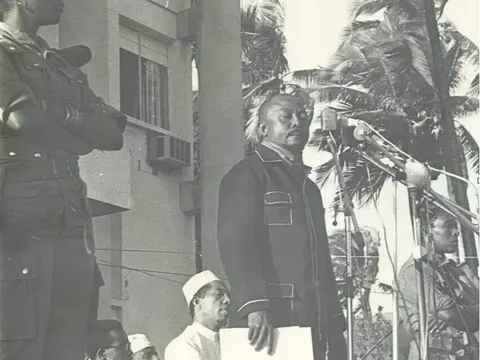 PeopleAli SoilihThe revolutionary Comorian leader whose government briefly legalised cannabis while challenging traditional authority. Youth participation and women’s emancipation coexisted with militia violence and political repression; his overthrow in 1978 brought the ban back.
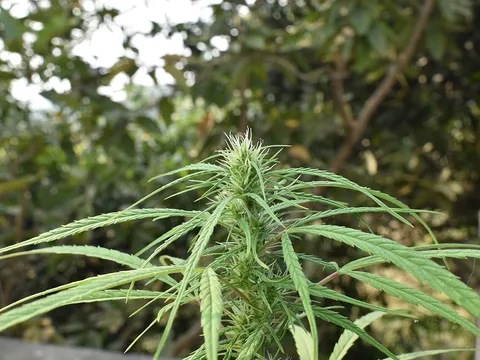 LanguageIndian hempThe name under which the British Empire, and then the world, first brought cannabis under control. It survives in the statute books of dozens of countries that have nothing to do with India.
Did you know? all cases →
1975 · Comoros
Cannabis was legal in the Comoros for three years: President Ali Soilih lifted the ban in 1975, and the government that overthrew him restored it in 1978.
The full story →The floor
9 countries score exactly zero: Bahrain, Brunei, Comoros, Indonesia, Kuwait, Maldives, Nauru, Saudi Arabia and Singapore. In each, even a small amount means prison or corporal punishment.
People · Comoros
The Comoros legalised cannabis in 1975 under Ali Soilih, a revolutionary president who also lowered the voting age to fourteen. He was overthrown and killed in 1978, and the ban came back.
Read the entry →
Datasets not part of the score
What other organisations publish about Comoros, and where it stands among the countries each one covers. Each dataset has a page of its own, with a world map and every country's figure.
Use
UNODC · 2002
Cannabis use
2.9%of people aged 15–64 (assumed)
survey 2002 · 15,000 people · earlier figure, not in UNODC 2026
Source Survey ages and years vary, and some surveys include children. Rates are not age-standardised; do not compare countries directly.WHO, Our World in Data · 2020
Alcohol drunk per person
0.23litres of pure alcohol a year
0.16 · 20000.16 · 20010.27 · 20020.38 · 20030.47 · 20040.43 · 20050.34 · 20060.25 · 20070.21 · 20080.20 · 20090.20 · 20100.18 · 20110.21 · 20120.22 · 20130.22 · 20140.20 · 20150.23 · 20160.25 · 20170.25 · 20180.25 · 20190.23 · 202020002020 Higher than 9% of 187 countriesLowestHighestper person aged 15 or over · 2020 · 0.16 in 2000 · 0.20 in 2010
Law
UNODC · 2024
Cannabis seized
437kg in 2024
2,000 · 20211,144 · 20222,320 · 2023437 · 202420212024 Higher than 23% of 163 countriesLess seizedMore seized316 kg of herb · 121 kg of resin
Society
Cato and Fraser Institutes · 2023
Human Freedom Index
5.20of 10
6.20 · 20175.67 · 20185.41 · 20195.22 · 20205.19 · 20215.29 · 20225.20 · 202320172023 Higher than 15% of 164 countriesLess freeFreerrank #140 of 165 · personal freedom 4.98 · economic freedom 5.51
V-Dem, Our World in Data · 2025
Civil liberties
0.48of 1 in 2025
0.10 · 19000.11 · 19010.11 · 19020.11 · 19030.11 · 19040.11 · 19050.11 · 19060.11 · 19070.11 · 19080.11 · 19090.11 · 19100.11 · 19110.11 · 19120.12 · 19130.13 · 19460.15 · 19470.17 · 19480.17 · 19490.18 · 19500.18 · 19510.18 · 19520.18 · 19530.18 · 19540.18 · 19550.18 · 19560.19 · 19570.19 · 19580.19 · 19590.19 · 19600.19 · 19610.19 · 19620.19 · 19630.19 · 19640.20 · 19650.20 · 19660.20 · 19670.20 · 19680.20 · 19690.20 · 19700.20 · 19710.21 · 19720.21 · 19730.21 · 19740.30 · 19750.28 · 19760.29 · 19770.30 · 19780.32 · 19790.33 · 19800.33 · 19810.33 · 19820.33 · 19830.33 · 19840.33 · 19850.33 · 19860.33 · 19870.33 · 19880.34 · 19890.50 · 19900.55 · 19910.58 · 19920.58 · 19930.58 · 19940.57 · 19950.57 · 19960.58 · 19970.58 · 19980.60 · 19990.61 · 20000.61 · 20010.61 · 20020.62 · 20030.61 · 20040.62 · 20050.62 · 20060.63 · 20070.63 · 20080.62 · 20090.62 · 20100.62 · 20110.62 · 20120.66 · 20130.66 · 20140.66 · 20150.64 · 20160.63 · 20170.61 · 20180.53 · 20190.51 · 20200.50 · 20210.49 · 20220.49 · 20230.47 · 20240.48 · 202519002025 Higher than 27% of 175 countriesFewer libertiesMore liberties0.19 in 1961 · 0.50 in 1990
Our World in Data, World Bank · 2025
Population
882,847people in 2025
85,742 · 1900105,346 · 1910129,010 · 1920139,454 · 1930149,571 · 1940161,951 · 1950197,710 · 1960244,196 · 1970337,728 · 1980444,601 · 1990536,084 · 2000654,846 · 2010802,172 · 2020882,847 · 202519002025 Higher than 18% of 196 countriesLowestHighest85,742 in 1900 · 161,951 in 1950 · 536,084 in 2000
CEPII
Former colonial rulers
Once ruled by France
World Bank · 2025
Government effectiveness
29of 100
14 · 199614 · 199824 · 200035 · 200224 · 200322 · 200419 · 200519 · 200619 · 200722 · 200822 · 200923 · 201022 · 201123 · 201223 · 201327 · 201426 · 201527 · 201628 · 201727 · 201827 · 201926 · 202023 · 202126 · 202228 · 202330 · 202429 · 202519962025 Higher than 11% of 195 countriesLowestHighestestimate -1.14 on a scale of −2.5 to 2.5 · 2025 · 24 in 2000 · 26 in 2015
Transparency International · 2024
Corruption Perceptions Index
21of 100
28 · 201228 · 201326 · 201426 · 201524 · 201627 · 201727 · 201825 · 201921 · 202020 · 202119 · 202220 · 202321 · 202420122024 Higher than 10% of 178 countriesLowestHighest0 highly corrupt, 100 very clean · 2024 · 26 in 2015 · 21 in 2020
Pew Research Center · 2020
Most common religion
Muslims
the largest group · 2020
World Bank · 2025
Income per person
$3,622per person
3,179 · 19902,911 · 19913,061 · 19923,082 · 19932,907 · 19943,018 · 19952,952 · 19963,029 · 19972,978 · 19983,005 · 19992,918 · 20003,013 · 20013,086 · 20023,086 · 20033,122 · 20043,232 · 20053,112 · 20063,075 · 20073,134 · 20083,172 · 20093,227 · 20103,294 · 20113,331 · 20123,406 · 20133,403 · 20143,371 · 20153,412 · 20163,472 · 20173,529 · 20183,523 · 20193,447 · 20203,449 · 20213,466 · 20223,508 · 20233,556 · 20243,622 · 202519902025 Higher than 13% of 187 countriesLowestHighestat purchasing power parity, 2021 dollars · 2025 · $3,179 in 1990 · $3,227 in 2010
World Bank · 2024
Development indicators
32.5%use the internet
0% · 19900% · 19970% · 19980.1% · 19990.3% · 20000.4% · 20010.6% · 20020.8% · 20031.3% · 20042% · 20052.2% · 20062.5% · 20073% · 20083.5% · 20095.1% · 20105.5% · 20116% · 20126.5% · 20137% · 20147.5% · 20157.9% · 20168.5% · 201716.4% · 201922.4% · 202030.7% · 202131.4% · 202231.9% · 202332.5% · 202419902024 Higher than 15% of 195 countriesLowestHighest33.5% live in towns · 4.5% aged 65+ · life expectancy 67 · 2024 · 0.3% in 2000 · 5.1% in 2010
GDELT · 2025
Cannabis in the news
0%of global news: cannabis articles from here
0% · 20170% · 20180% · 20190% · 20200% · 20210% · 20220% · 20230% · 20240% · 202520172025 Higher than 0% of 147 countriesLowestHighest2025 average, 348 days · 0% in 2018 · 0% in 2021
History 7 of 8 checked against a source
Score and entries per decade
0 today, from 11 before its first recorded change
This country's score Entries that moved the score Context only
Sources hover a number in the text to see its source
- Cited
- 6
- Websites
- 6
- Last reviewed
- History checked
- 7/8
Most cited
- afro.who.int1
- counterterrorlaw.info1
- data.unodc.org1
- en.wikipedia.org1
- incb.org1
- policehumanrightsresources.org1
All 6 sources
- Comoros — Penal Code, Act 95-012/AF (English translation, policehumanrightsresources.org)Article 328 (pp. 67–68 of the local PDF extraction); hashish and Indian hemp named; 1–10 years, 1M–50M francs.archived
- Comores — Code pénal 2020, Loi n° 20-038/AU du 29 décembre 2020, promulguée par décret n° 21-018/PR du 16 février 2021 (droit-afrique.com copy)archived
- Wikipedia — Cannabis in the Comorosarchived
- UNODC Data Portal — Drug seizures, reported seizures in kilogram equivalents (World Drug Report data)archived
- WHO Regional Office for Africa — World Drug Day in the Comoros, prevention call (June 2025)Interior minister statement; 585 kg cannabis seized 2023–2025; 27 overdose deathsarchived
- International Narcotics Control Board — Travellers carrying medicines containing controlled substances