The story · written by gpt-6,
On 15 December 2023, coffeeshops in Breda and Tilburg could begin selling cannabis supplied by regulated growers. This was the start-up phase of the Dutch controlled supply-chain experiment, not the immediate replacement of every tolerated product in the two cities.
The government’s launch announcement explicitly allowed regulated and tolerated products to be offered together. The change created a lawful route for specified supplies while operators learnt how to use it.
The problem at the back door
Under the established system, a coffeeshop could sell small amounts under conditions of tolerance while its commercial supply came from an illegal market. The coffeeshop tradition describes this mismatch between the public counter and the hidden supply chain.
The experiment addressed production, distribution and retail together. Its significance was not simply a new product on a menu: participating shops could receive cannabis through a regulated chain rather than depending entirely on tolerated sales of illegally supplied material.
Learning before full implementation
The launch announcement describes growers, shop owners, transporters and supervisors gaining experience with supply, secure transport, supervision and a tracking system. The initial phase therefore tested practical arrangements as well as the legal exception.
During that phase, the announcement permitted shops to hold up to 500 grams of regulated products alongside 500 grams of tolerated products. Those were the stated start-up stock rules, not a permanent description of every Dutch coffeeshop’s inventory limit.
A bounded legal exception
The official explanation of the legislation identifies the experiment act and the implementing rules governing participants, products and packaging. The permission existed within that framework.
It did not legalise commercial cultivation throughout the Netherlands or make every existing supplier a licensed producer. Nor did the start-up phase mean that every product sold in the participating shops already came from the new chain.
The next stage
The official timeline distinguishes the start-up stage from the later transition and experimental phases. The April 2025 move towards regulated-only supply belongs to that next development.
December 2023 established a working legal supply route in two municipalities. Its limited scale and coexistence with tolerated products are essential to understanding what had changed, and what the experiment had yet to test.[1][2][3]
In the cultural atlas
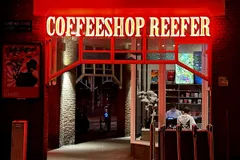
Listed for context. No score change is recorded for Netherlands here.
References
- Rijksoverheid — Start-up phase begins in Breda and Tilburg (15 December 2023)archived
- Government of the Netherlands — Legal basis of the Controlled Cannabis Supply Chain Experimentarchived
- Government of the Netherlands — Experiment timelinearchived
- Wikipedia — Cannabis in the Netherlandsarchived
- Wikipedia — Drug policy of the Netherlandsarchived
Checked. The date and the event were compared with a source that was read.