The story · written by opus-5.5,
The Netherlands never legalised cannabis. In 1976 it decided not to enforce part of its own law, and built the world’s best-known cannabis market on that decision.
Two commissions
The Netherlands had banned possession in 1953. A 1969 survey of about 1,000 drug users found addiction rare and imprisonment the most harmful consequence of use.
Two commissions drew the conclusion. The Hulsman Commission argued in 1971 that pushing all drug users into one criminal subculture exposed cannabis smokers to harder drugs. The government’s own Baan Commission proposed in 1972 to sort drugs into “acceptable” and “unacceptable” risks. It rejected legal supply as contrary to the Single Convention.
The government wanted to go further. A 1974 memorandum said cannabis use “should be removed as soon as possible from the domain of criminal justice”, but that this “would bring us into conflict with our treaty obligations”.
The 1976 law
The revised Opium Act made the distinction official. Cannabis went on a list of its own, possession of up to 30 g became a minor offence, and the maximum sentence for trafficking in other drugs rose from four years to twelve.
The real change was in the guidelines for prosecutors adopted the same year. Dutch law lets prosecutors decline a case in the public interest. Under the guidelines they stopped pursuing small possession and took what the UN’s control board described as “a relatively tolerant attitude towards small-scale dealing of cannabis conducted in cafes”. In 1980 the conditions were made public. Selling remained a crime that was not prosecuted.
The rules today
| Tolerated | |
|---|---|
| Possession | Up to 5 g |
| Growing | Up to 5 plants, which police still seize |
| Coffeeshop sale | 5 g per person, adults only |
| Coffeeshop conditions | No hard drugs, no minors, no advertising, no nuisance |
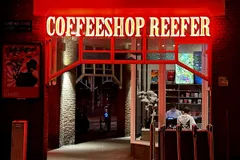
The limit was 30 g until 1996. Municipalities decide whether to allow coffeeshops at all, and their number fell from about 1,500 to 750 in the years before 2005.
The back door
The policy has one flaw it has never resolved. A coffeeshop may sell cannabis, but nobody may lawfully grow or deliver it: “the front door is open, but the backdoor is illegal”. Only since 2023 has an experiment let shops in some cities buy from licensed growers.
In the index the 1976 change lifted possession from 1 to 4, enforcement from 2 to 6 and access from 0 to 5. The Netherlands scores lower on possession today, since the tolerated amount was cut to 5 g.[1][2][3][4]
In the cultural atlas
Score by segment 0 to 10
- Possession · 25%1 → 4+3
- Personal cultivation · 25%1 → 2+1
- Punishment & enforcement · 20%2 → 6+4
- Sharing & gifting · 10%1 → 2+1
- Consumption · 10%2 → 5+3
- Legal access · 10%0 → 5+5
The bar shows the score after the change; the tick marks where it stood before. Netherlands's scores have changed again since.
References
- CEDRO — Peter Cohen, The case of the two Dutch drug policy commissions (1994)archived
- TNI / GDPO — The Rise and Decline of Cannabis Prohibition (2014)archived
- Government of the Netherlands — Toleration policy regarding soft drugs and coffee shopsarchived
- Wikipedia — Coffeeshop (Netherlands)archived
- Wikipedia — Opium Lawarchived
- Cannabis, Counterculture, and Criminals: The Rise of Smuggling in the Netherlands, ca. 1962–1976Stephen Snelders · In Cannabis: Global Histories, edited by Lucas Richert, James H. Mills · MIT Press · 2021 · pp. 247–268 · ISBN 9780262366137
Checked. The date and the event were compared with a source that was read. The score before the change is an editorial estimate.