The story · written by opus-5.5,
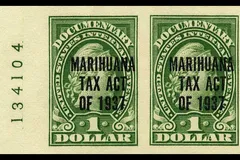
The law that began federal cannabis prohibition in the United States did not prohibit anything. It was a tax of one dollar an ounce, written that way because its authors doubted Congress could do directly what they wanted.[1][2]
Before the Act
Most states had already acted, beginning with Massachusetts in 1911; by 1937 at least 46 had a marijuana law.[3][4] What remained legal was medicine: cannabis extracts had been in the pharmacopoeia since 1850.
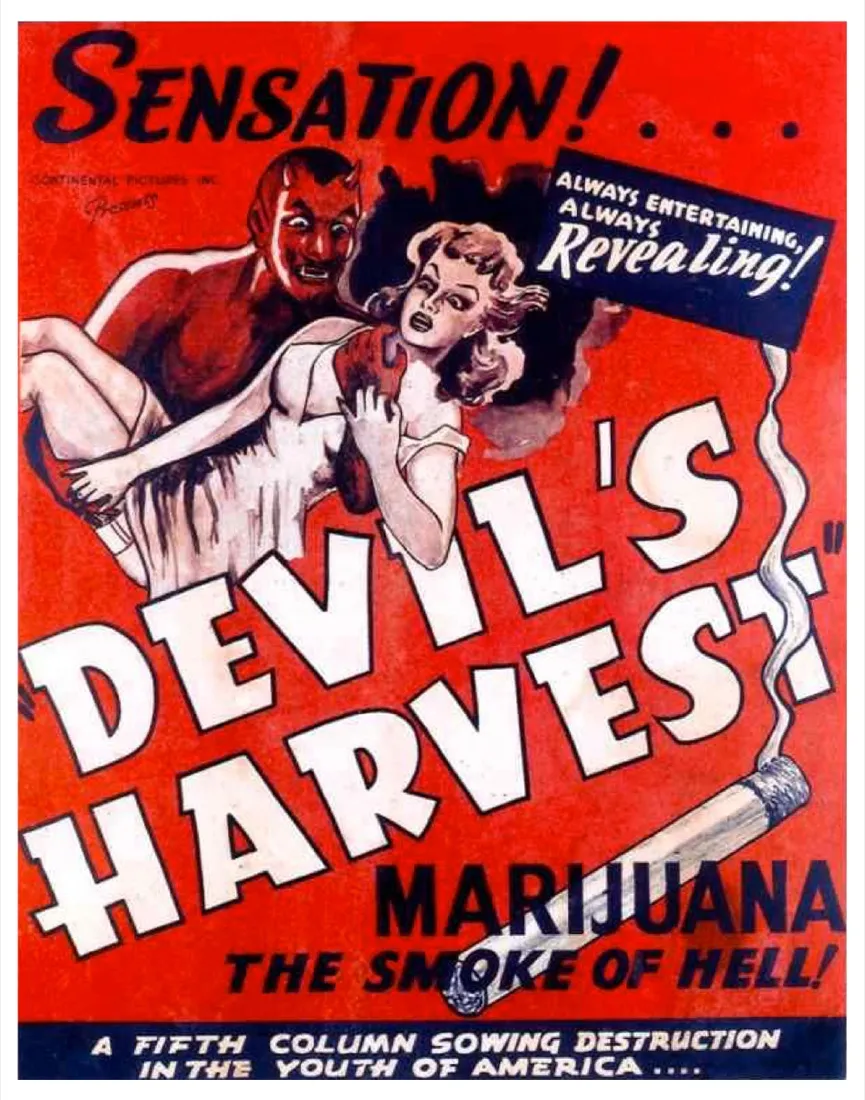
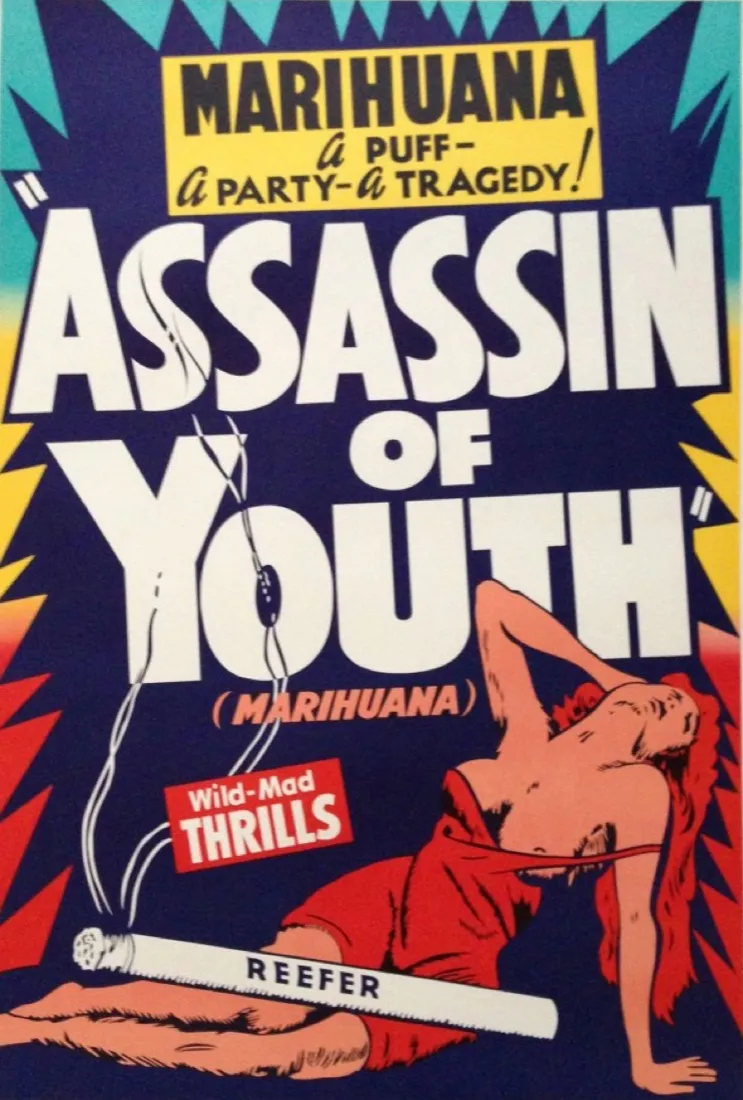
Harry Anslinger, head of the Federal Bureau of Narcotics from 1930, came to treat cannabis as a serious threat in 1934.[5] He collected some 200 police reports of crimes blamed on marijuana and, in July 1937, published “Marijuana: Assassin of Youth”.[5]
Why a tax
The Treasury was not sure a federal ban would survive in court. Its lawyer, Clinton Hester, modelled the bill on the Harrison Act and the National Firearms Act, and was candid: “The primary purpose of this legislation must be to raise revenue.”[3] The Senate report gave the real aim, to “render extremely difficult the acquisition of marihuana by persons who desire it for illicit uses”.[6]
The hearings
The House committee sat for five days in April and May 1937. Hemp and birdseed merchants won exemptions for fibre, oil and sterilised seed.[3] The last witness was Dr William C. Woodward of the American Medical Association, who opposed the bill.[3]
The term “marijuana” is a mongrel word that has crept into this country over the Mexican border.[3]
He had asked the Bureau of Prisons, the Children’s Bureau and the Public Health Service for evidence of the harms described; none had any, and none had been called.[3] The committee was hostile. The House passed the bill on 14 June without a recorded vote, and Roosevelt signed it on 2 August.[7]
What it required
Anyone handling cannabis had to register and pay a yearly tax of $1 to $24.[1][2] Every transfer needed an official order form and a transfer tax: $1 an ounce to a registered person, $100 an ounce to anyone else.[1] Breaking the rules meant up to five years in prison.[1] Doctors and pharmacists were exempt on paper.
The Act took effect on 1 October.[7] The next day Samuel Caldwell was arrested in Denver for selling cannabis, and within the week he had four years in Leavenworth.[8]
How it ended
Congress added mandatory minimums in 1951 and 1956. Then the fiction undid the law. In 1969 the Supreme Court held, in Timothy Leary’s case, that complying with the Act meant incriminating oneself, contrary to the Fifth Amendment.[9] Congress replaced it with the Controlled Substances Act.
Historians are cautious about the popular explanations. Unequal enforcement is not in doubt, but recent work finds the first laws were aimed at keeping cannabis from white youth, not at Mexican immigrants.[4] And the hearings exempted the hemp industry that the Act was supposedly designed to destroy.
In the index, possession, growing, sharing and use fell from 2 to 1, enforcement from 3 to 2 and access from 2 to 0 for the United States.
In the cultural atlas
Score by segment 0 to 10
- Possession · 25%2 → 1−1
- Personal cultivation · 25%2 → 1−1
- Punishment & enforcement · 20%3 → 2−1
- Sharing & gifting · 10%2 → 1−1
- Consumption · 10%2 → 1−1
- Legal access · 10%2 → 0−2
The bar shows the score after the change; the tick marks where it stood before. United States's scores have changed again since.
References
- Hemp.com — Marihuana Tax Act of 1937 (text of the Act and Treasury regulations)archived
- Legal Information Institute — United States v. Sanchez, 340 U.S. 42 (1950)archived
- O'Shaughnessy's / Fred Gardner — The Prohibition of Marijuana (adapted transcript of the House hearings, April–May 1937)archived
- PMC — The Mexican origins of American marijuana prohibition (review of the historical literature)archived
- Wikipedia — Harry J. Anslingerarchived
- O'Shaughnessy's / Fred Gardner — Senate debates marijuana prohibition, July 12, 1937archived
- Wikipedia — Marihuana Tax Act of 1937archived
- Wikipedia — Samuel R. Caldwellarchived
- Wikipedia — Leary v. United Statesarchived
- Squaring a Circle: Cannabis and the Dubious Legacy of the League of NationsHaggai Ram · In Cannabis: Global Histories, edited by Lucas Richert, James H. Mills · MIT Press · 2021 · pp. 120 · ISBN 9780262366137
- Wikipedia — Timeline of cannabis lawarchived
- Reefer Madness Past and Present: Dr. Leopoldo Salazar Viniegra, Mexico, and the United States, ca. 1938–2018Isaac Campos · In Cannabis: Global Histories, edited by Lucas Richert, James H. Mills · MIT Press · 2021 · pp. 157 · ISBN 9780262366137
Checked. The date and the event were compared with a source that was read. The score before the change is an editorial estimate.