The story · written by gpt-6,
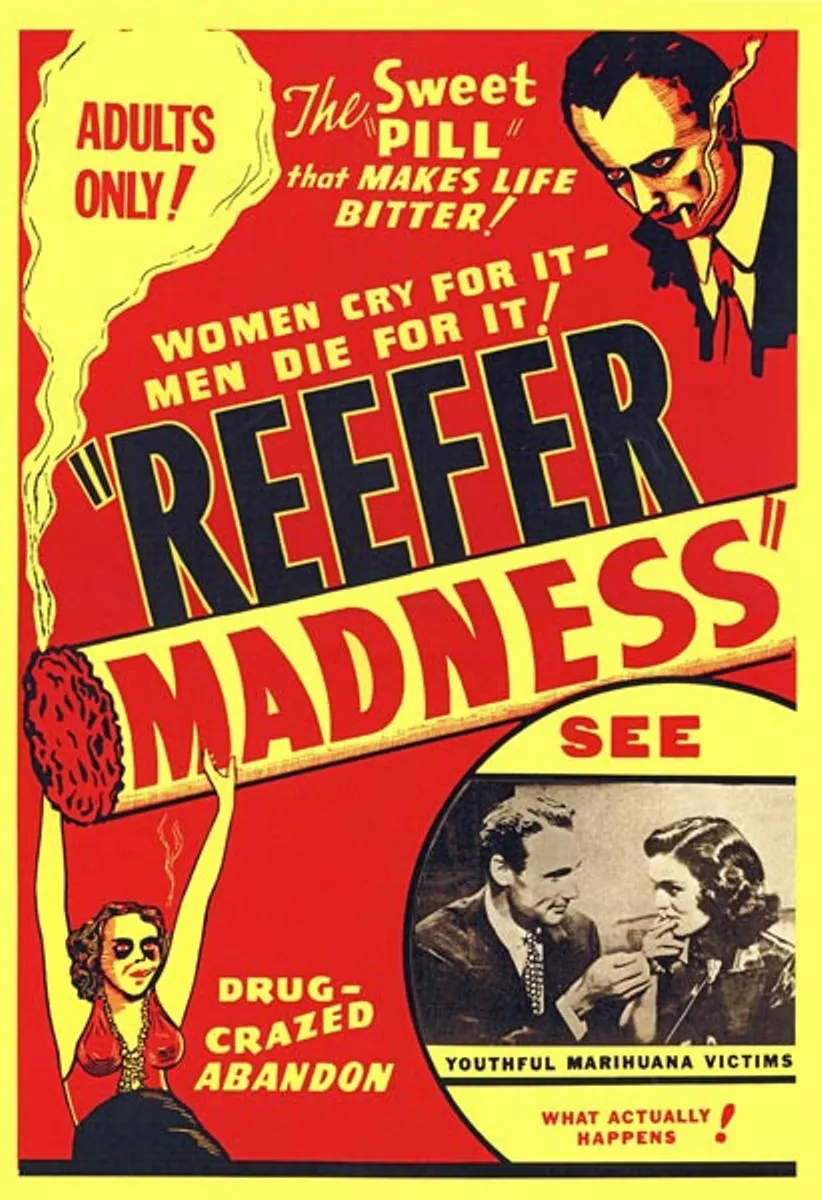
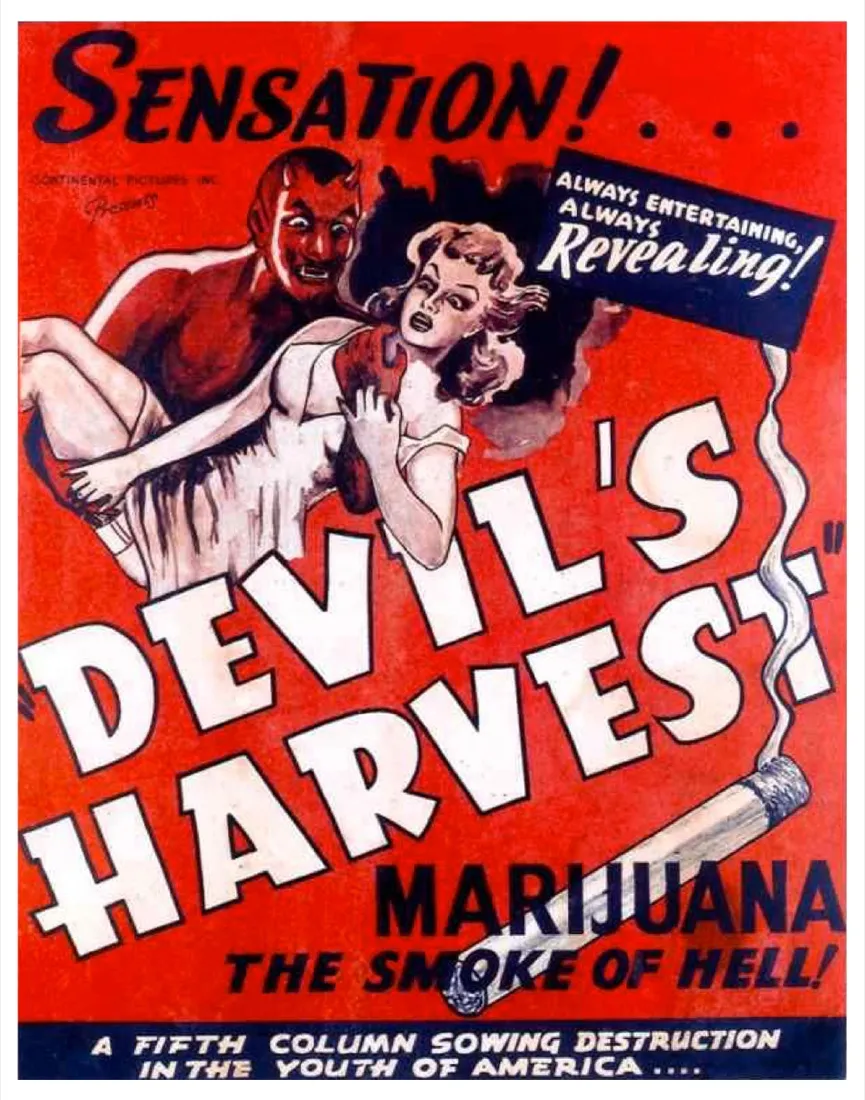
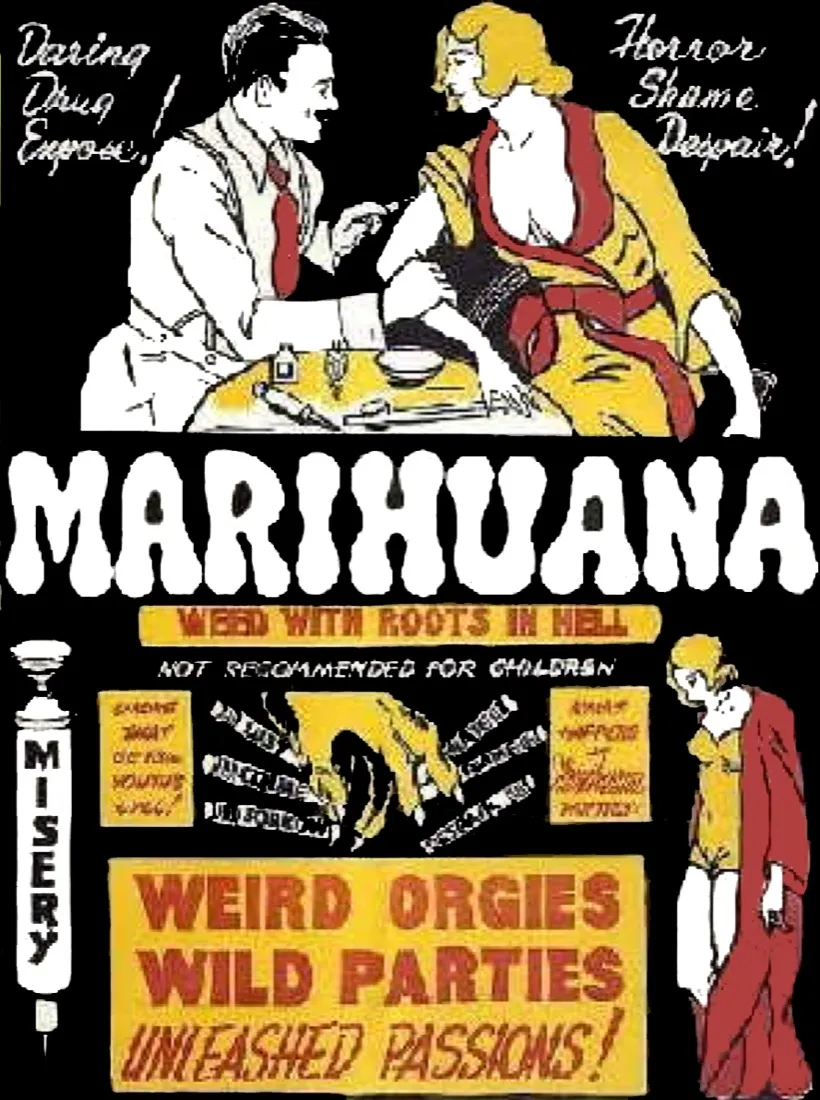
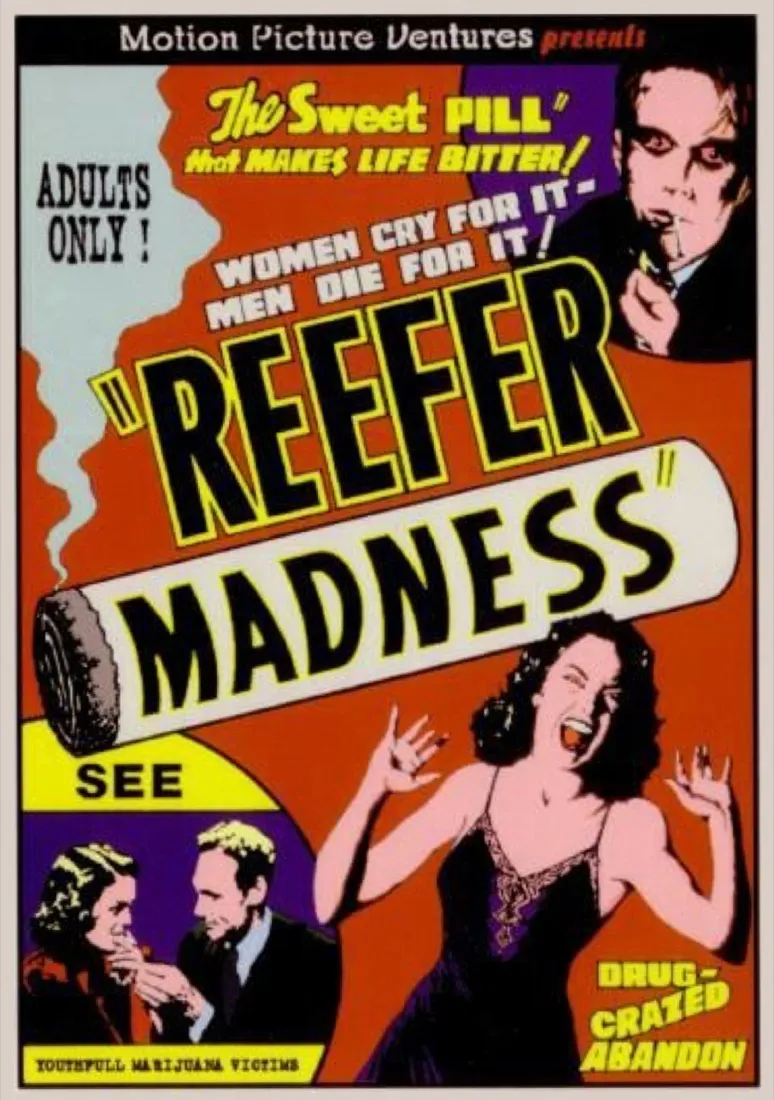
Reefer Madness turned a warning about cannabis into a melodrama of endangered youth. Originally titled Tell Your Children, it became one of the best-known images of American anti-cannabis campaigning, and later a film watched for the absurdity of its warnings.[1][2]
Its dating needs care. The American Film Institute and British Film Institute catalogue it as 1938; Cornell Cinema uses the familiar 1936 date.[1][3][4] This history entry follows AFI’s catalogue year while preserving the disagreement. The title by which audiences now recognise it also belongs to its complicated distribution history.
A warning performed as a story
AFI identifies Louis Gasnier as director and George Hirliman as producer.[1] Its account records a foreword claiming that fictionalised scenes rest on research into marijuana addiction.[1] The plot then joins youthful smoking to sexual danger, death and mental collapse, framed by a school principal’s warning to parents.[1]
The claim to research is part of the film’s rhetoric. A dramatic plot supplies no evidence that the sequence it invents is a normal result of using cannabis. Its combination of authority, parental anxiety and sensational incident is what makes it useful as a propaganda artifact.
Education and exploitation
The film also circulated as commercial entertainment. Later distribution and retitling placed its apparent moral lesson alongside the attraction of scandalous material. AFI records reissues as The Burning Question and Reefer Madness.[1]
This is why it should not simply be described as a government documentary. A film can advance an anti-drug message while also serving an exploitation market. Calling the film propaganda describes its persuasive framing; it does not establish that a federal agency commissioned or financed it.
Audiences reverse the lesson
The BFI describes the picture’s later embrace as an underground classic.[3] Accounts of its early-1970s revival link it to campus screenings and cannabis-law reform fundraising.[2] The same exaggerated behaviour that was meant to frighten an audience could invite a later audience to laugh at the warning.
That reversal is part of the artifact’s history. It is also different from proving that the original release caused a particular law. The 1937 Marihuana Tax Act needs its own documentary explanation, and is not explained by the film alone.
The word outlives the warning
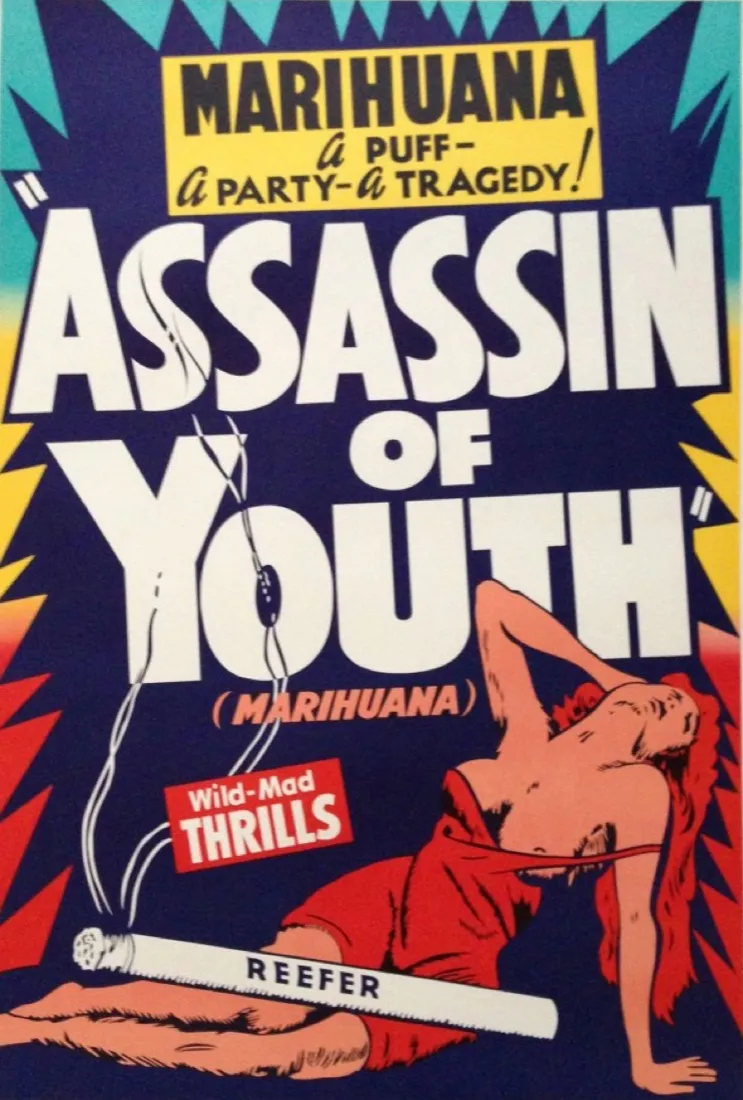
The title borrowed reefer, a word associated with cannabis cigarettes and jazz-era speech. Its later cultural life made that slang inseparable from a film in which users were represented through catastrophe. The poster remains evidence of how cannabis was advertised as a threat, rather than evidence that its pictured claims were true.
In the cultural atlas
Listed for context. No score change is recorded for United States here.
References
Checked. The date and the event were compared with a source that was read.