The story · written by gpt-6,
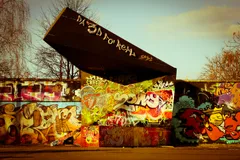
During the night of 10–11 September 1993, artists and activists occupied former military barracks in Ljubljana to prevent demolition. The occupation provided the setting for Metelkova’s autonomous cultural zone, with music venues, studios and community organisations.
It was an event about the use of urban space. The connection to cannabis comes from later accounts of activity there, not from evidence that the occupation itself changed drug law.
A collective claim to the buildings
The Culture of Slovenia account describes a network of organisations pursuing cultural uses for the site before direct action began. The occupation interrupted a threatened destruction and redevelopment of the former barracks.
That sequence distinguishes the event from the opening of an ordinary cultural centre. The participants first had to preserve access to space in which their programmes could exist. The buildings became the subject of a collective claim, rather than simply premises supplied to a single institution.
Autonomy as organisation
The cultural portal describes the site’s forum making decisions through consensus and direct democratic principles. It documents a diverse programme of underground and alternative cultural expression.
Autonomy in this account concerns organisation and participation. It does not mean recognition as a sovereign territory, or that national laws ceased to apply. That distinction is necessary when comparing Metelkova with Christiania or Ruigoord: shared interests in free cultural space do not give the places identical legal histories.
The later cannabis connection
A visitor’s report in Harmony, published in September 2017, describes cannabis, mostly hashish, being sold on the streets around Metelkova. The report also discusses clubs, galleries, studios and inclusive community activities.
It is evidence of a visitor’s observation at that time. It does not establish the size or continuity of the market, or the opinions of every group working there. Nor does it justify turning the original occupation into a cannabis legalisation event.
What the occupation made possible
Metelkova’s relevance to this atlas is the overlap between a documented autonomous cultural space and later cannabis activity. The evidence is stronger for the cultural institutions and occupation than for a continuous cannabis practice reaching from 1993 to the present.
The Metelkova tradition entry follows that qualified relationship. Slovenia’s later cannabis referendum belongs to a separate national political process. An advisory vote about cannabis and an occupation to preserve cultural buildings concern different forms of freedom, even where the same audiences may care about both.[1][2]
In the cultural atlas
Listed for context. No score change is recorded for Slovenia here.
References
Checked. The date and the event were compared with a source that was read.