The story · written by gpt-6,
Cannabis cultivation became established in Paraguay’s Amambay department in the late 1960s, particularly around Pedro Juan Caballero on the Brazilian border. The timeline uses 1969 as a marker for that period; it is not the date of a verified first planting.
Guillermo Garat’s research places the crop within a border economy shaped by smuggling, political connections and demand from neighbouring countries. It also notes that the exact onset of cultivation has not been securely established.
A border market takes shape
Amambay’s position matters to the account. Buyers across the Brazilian frontier supplied a market for production on the Paraguayan side. The crop did not have to become widely consumed locally to become economically significant.
Garat’s report describes the expansion of trafficking structures alongside agricultural change and the integration of illicit income into local power. These are findings from a later study looking back at a developing market, rather than a contemporary record of every transaction in 1969.
The people working the crop
The report identifies young growers and workers connected to intermediaries who arranged buyers and movement of the harvest. Cultivation, drying, pressing and packaging formed stages of the same production chain.
Its account of limited rural opportunities is important to interpreting participation. A profitable export market can coexist with insecurity for the people producing it. The income of intermediaries and trafficking organisations should not be treated as the earnings of each farmer or labourer.
The compressed product
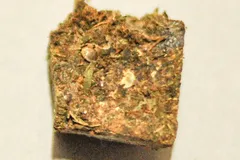
Paraguay’s characteristic bricked cannabis travelled to neighbouring markets. The Brick weed entry describes this form, including the distinction between compressed plant material and separated hashish resin.
The block made the commodity easier to move, while giving its eventual buyer little direct knowledge of the place or conditions of cultivation. That connection between an agricultural district and an anonymous product is part of the cultural history of regional cannabis use.
A consumer exception was a different question
Paraguay’s later 1988 personal-possession exception addressed punishment of consumers, not authorisation of the supply chain. The TNI legal overview describes the ten-gram cannabis limit for personal consumption.
Those distinctions keep the chronology clear. Establishment of a crop, growth of an illicit export market and an exception for personal possession are separate developments. The late-1960s event explains how a border region became a production centre; it does not record a legal market being created or a precise annual volume already reached.[1][2]
In the cultural atlas
Listed for context. No score change is recorded for Paraguay here.
References
- Guillermo Garat — Paraguay, The cannabis breadbasket of the Southern Cone, TNI Drug Policy Briefing 46 (2016)archived
- Transnational Institute — About drug law reform in Paraguay (2015)archived
- Guillermo Garat — Paraguay, the cannabis breadbasket of the Southern Cone, TNI Drug Policy Briefing 46 (3 October 2016)archived
Checked. The date and the event were compared with a source that was read.